2008/05/28

NEWS and IMPROVISATIONS

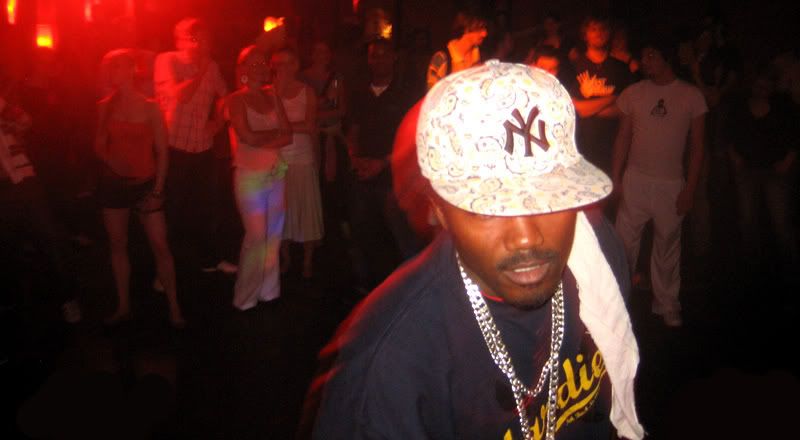
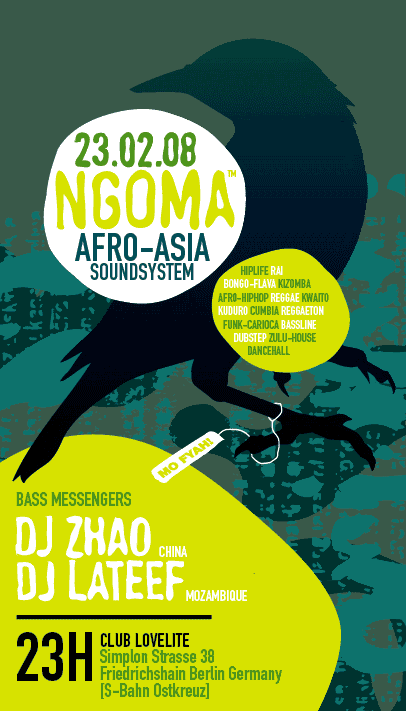
At the Konfrontationen festival in Austria last year i struck up a completely random conversation with someone standing next to me before a performance, and he turned out to be a regular visitor of this blog - always a great pleasure to meet internet music heads in real life. So if you are going to the FUSION FESTIVAL this summer, be sure to say hello, we will be playing on 2 separate nights:

SAT JUN 28 / 9PM - 12PM ---- DJ ZHAO solo
SUN JUN 29 / 1AM - 8AM ----- NGOMA Afro-Asia Soundsystem

Also NGOMA Mix Series VOL. 2 will be out soon!!!
..........................................................................................
Now, before we return to the Ocora diet, a nice bowl of improvised recordings to sate your appetites for contemplative and quiet sounds... sounds soothing me right now as i blog after returning home at 7AM from djing all night to a club full of people jumping up and down on a tuesday (i heart Berlin):
3 guitars, 1 bass, and some electronics, this quartet stretches out over 50 minutes of not only the scrapes and thuds of extended technique, but also the beautiful plucked tones.

Werner Dafeldecker: electric bass, double bass
Martin Siewert: acoustic guitar, electric guitar, electronics
Burkhard Stangl: acoustic guitar, electric guitar
Taku Sugimoto: electric guitar, 6-string bass guitar

Recorded at Wuschi's Basement (live) and Feedback Studio in Vienna, April 2000, and Tonstudio Amann in Vienna, October 2000. Released May 2002

SSSD - Home

this one on the whole, besides being varied with an all star contributor list, belongs to the more difficult, stringent, and kurmudgeony school of improvisation. not my favorite but still a very interesting and sometimes very good listen.

1. Scott Fields (electric guitar), and Yoshiko Kanda (percussion)
2. Utah Kawasaki (analog synthesizer), and Yuko Nexus6 (cassette player)
3. Gene Coleman (bass clarinet), Richard Teitelbaum (electronics, laptop computer), Brett Larner (koto), Ko Ishikawa (sho), and Aya Motohashi (hichiriki)
4. I.S.O.: Yoshimitsu Ichiraku (amplified percussion), Sachiko M (sampler with sine wave), and Yoshihide Otomo (electric guitar, turntable); and Kang Tae Hwan (alto sax)
5. Stefan Keune (sopranino sax), John Russell (acoustic guitar), Brett Larner (bass koto), and Masahiko Okura (alto sax)
6.Toshihiro Makihara (percussion), Brett Larner (gu zheng), Utah Kawasaki (analog synthesizer), Ami Yoshida (voice), Yuko Nexus6 (sampler), and Taku Sugimoto (6-string bass guitar)
7.Carl Stone (laptop computer)
8. Kazuo Imai (electri guitar, electronics), and Elliot Sharp (electric guitar, electronics, sax)

All recorded live at Deluxe in Azabujuban, Tokyo. Released July, 2001

Deluxe Improvisation Vol. 2 PART A PART B

a re-up of this collaboration between our buddy Otomo and some Korean friends of his:

Otomo Yoshihide, Park Je Chun, Mi Yeon - Loose Community


as per requested, a re-up of the classic I.S.O - I.S.O. (live in a zen garden)

and another re-up:
Taku Sugimoto & Kevin Drumm - Den

2008/05/20

NGOMA presents G-SOLO LIVE: Jun 07


a lot of people i have never seen before came out, i guess either curious or in the know. G's flow was pretty tight, the beats were fire, a really good night.
more photos and videos here.

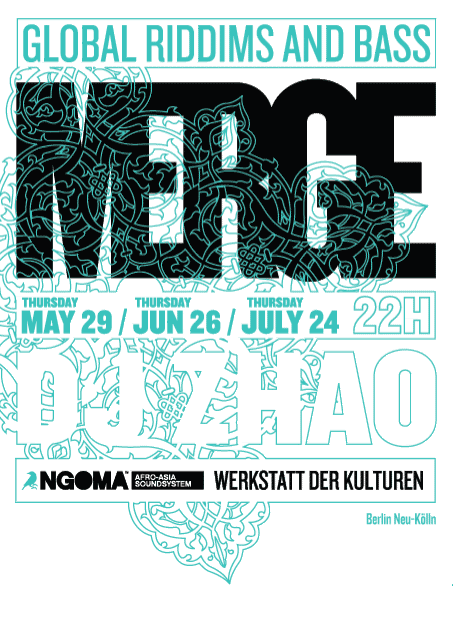
MERGE: May / Jun / July

location: Werkstatt der Kulturen
Address: Wissmannstr. 32 [ U Hermannplatz ] Berlin Neu-Kölln
Tel: 60 97 70-0 Website: www.werkstatt-der-kulturen.de Email: Werkstatt.Kulturen@t-online.de
...............................................................................
doing a (G?) solo new series of monthly events (last thursday of each) which takes place in a culture center in Neu Kolln. I'm curious to see how they will turn out as the area is only beginning to get filled up with hipsters, and while the location is very cool, a nice sized basement bar with dancefloor and decent sound, it is not EXACTLY known as a hot night spot. please do come out, bring a date, roll deep with ya crew, or just pop up G-Solo Gangasta Style and say hi, enjoy some of the bumpinest groovinating music you'll never hear anywhere else in Berlin.

2008/05/17

OCORA: India part 2

an entirely Northern edition, we shall dip into the Karnatic south later. the Sangeet Trio is lovely as can be... and I really love the 2 Gopal Krishan albums here: his sound is very special for me... wicked.


Sangeet Trio :
Vishwa Mohan Bhatt, guitar
Tarun Bhattacharya, santur
Renu Mojumdar, bansuri)
recorded Dec. 16, 1995, Théâtre de la Ville, Paris

"This is an unusual ensemble for Indian classical music. First of all, instead of a soloist accompanied by the tabla drums and the sitar-like tampura, there is a trio plus accompanists. The trio consists of three unusual instruments: bansuri flutes (played by Renu Mojumdar), a modified guitar (played by Vishwa Mohan Bhatt), and the Middle Eastern santur hammer dulcimer (played by Tarun Bhattacharya). The guitar is especially interesting. It has a short neck, four melody strings, three drone strings, and 12 sympathetic strings. It is played with a metal slide in a quasi "slack key" style. The slide is frequently used to bend notes in the Indian fashion, but when Bhatt resorts to more of a finger-picking style, it sounds American. The trio plays "Raja Jog" at this live concert in Paris. It is an exceedingly long raag (66 minutes), and the alap -- the opening 18-and-a-half-minute slow movement -- might be a little tedious for Western ears. The two faster sections are more engrossing. The musicians chose a raag whose intervals recall the American blues, and there is a repeated five-note figure that could almost be a jazz riff. The overall effect is more like jazz than blues. These allusions are achieved without any straining for effect, if they are indeed conscious at all. Good fun.(AMG)"

Inde du Nord: Sangeet Trio en Concert


"The vichitra veena is a slide instrument used in North Indian classical music, but it has become quite rare today. Gopal Krishan is one of only a handful of players with recordings available. I have heard them all, and I've heard all of GK's available CDs, and I believe the raga JOG on this double album is his best effort on record.

As you may or may not know, JOG is similar to the American blues scale - it uses both forms (flat/natural) of the 3rd note, and the flat is a pretty high flat, just like in the blues. It's a nice effect to hear something so like a slide guitar play something so like the blues - so like, and yet so unlike ...

G.K. is very fond of LAYAKARI, playing around with the rhythm, and he does it a lot here in JOG. Tabla player is Latif Ahmed Khan of Dehli gharana, student of ustad Gami Khan, and he has played good solid Dehli style. Tabla sound is good, not the least tinny. He has not played any Zakir Hussain fireworks, just good accompaniment with communication and togetherness with GK in layakari parts. You will be hearing them both make small mouth noises on various "SAM" points; this recording comes very much alive. Interestingly, ALAP is comparatively speaking pretty fast and GAT is comparatively slow tempo, though ending with some JHALLA.

(Gopal Krishan by the way learnt from his father, called Nand Kishor, later with Gwalior gharana teacher Khubchand Bramchari - his rival on the vichitra veena Dr Mustafa Raza plays Gwalior style - and finally went to Ravi Shankar. So the style he plays here reminds of Ravishankar more then Gwalior, hence the layakari. He plays I think a total of 4-6 slightly out-of-tune notes in JOG - he's human! he's human! (Amazon Reviewer)"

India: Gopal Krishan - Inde du Nord, L'Art de la Vichitra Vîna
DISC 1 DISC 2-A DISC 2-B


Gopal Krisnan - Dhrupad et Khyal
PART-A PART-B


Inde du Nord - Raga Bhairav – Sarod - Partho Sarothy: PART A PART B

2008/05/12

OCORA: India part 1

i have a crazy and over ambitious idea to upload and make available the (very near) entirety of the Ocora catalog (400+ including the very rare early vinyl-only releases) on this here blog. a monolithic task, and I will likely die of old age before it is complete, so let's get this party started PRONTO. (in reality what will likely happen is the uploading of what i consider the Crème de la Crème...)

lately I have been listening to a lot of the recordings from India, so it is i s'pose as good a place as any to jump in - here are 4 + 1 from the past, with much more come.

"Balaram Pathak is a very peculiar sitar player. After many years of listening to Indian classical music I have never come across someone of this style. The use of flageolett technique is typical for his way of playing - something I have never heard with any other sitar player.

Even though I searched for long in India and in Europe I couldn't find further recordings of Balaram Pathak (other than the original Ocora Double LP of which this is a CD re-issue, which had one more Raga), and although the booklet says he lives in Delhi since 1981, nobody I asked there had ever heard of him. Strange, I thought, since he is definitely a true master of sitar. All I could think of is that some people take great caution to prevent him from playing on stage and recording music in India.

Actually there is some kind of "music mafia" in India, very active in this field. They don't let anyone come up from outside their own circles. I was told the great sarod master Amjad Ali Khan was sort of the head of this "mafia". If you don't bow to him, you'll never find a chance to record in India, since any company would have to face that Amjad Ali Khan and his circle would never record for them anymore - and his CDs and cassettes bring good money." -- Ambrose Bierce (to whom we owe the original rip)

Inde du Nord / Balaram Pathak

1. Raga Bilaskhani Todi - Alap, Jod, Gat (Rudratal)
2. Raga Kinari Bhairavi - Alap, Jod, Jhala, Drut Gat (Tintal)
3. Raga Mishra Pilu - Alap, Sitarkhani Gat (Adhatal)

Balaram Pathak - sitar
Vinode Pathak - tabla

and speaking of the God Father of the Indian Classical Music Mafia, here is the O.G. son of a bitch himself. (original upload also from Ambrose)

"Mian-ki-Malhar is a rainy season raga composed by the great North Indian composer Mian Tansen. It is to be played in the late night, or, during the rainy season, at any time of the day. Its associations are depth, seriousness, and a majestic and heroic demeanour. Its ascending scale is pentatonic, the descending scale is heptatonic.

Zilla-Kafi is a mixed raga of recent origin, and it is here used as the basis for a raga-mala ("garland of ragas"), where many different scales are used in succession"

Inde du Nord / Amjad Ali Khan

Amjad Ali Khan - sarod
Shafat Ahmed Khan - tabla

"Born in 1927 in Rajasthan's Udaipur, his father was a musician "at the court of the Maharaja of Udaipur" who played the dilruba, described in the notes as "a sort of cross between the sitar with its movable frets and the sarangi with its bow," who "worked out a special and rather unusual fingering technique for his son . . ." to play the sarangi, starting at age 6. Ram Narayan pioneered the use of the sarangi as a classical solo instrument. Ram Narayan studied as a child under a local sarangyia and also learned dhrupad, "a hieratic and sober genre from which khyal originated," with the famous Dagar brothers (cf. Music of the World CDT-114). "The essential approach of dhrupad stands out in the alap elaboration more particularly." At 16 he was seeking employment at All India Radio in Lahore as a vocalist, "a ploy to increase his chances of employment. The producer he met did not take long to notice the scars on his nails, which he knew at once were the result of intense sarangi practice (from 10 to 16 hours a day)." " -- Arcturus, original uploader.

"By the time he was just 14 years of age, Ramnarayan was a music instructor in a college in Udaipur; and by the time he was barely 16 years of age, he was appointed staff artiste by the All India Radio and posted in Lahore in undivided India. This was in 1943. By 1947, Ramnarayan had accompanied some of the foremost male and female classical singers of the time. His playing was both inspired and inspiring. He was able to spontaneously improvise as well as reproduce tonal nuances of the singers he accompanied. He played in the style of their ‘gharana’ and made the sarangi both speak and sing in what we may now call, in retrospect the ‘gayaki ang’. . . .

He decided to become a free-lance sarangi artiste in Bombay where he could make himself financially independent by playing for commercial cinema as well as by cutting discs of his own. He recorded his first 78 r.p.m disc in 1950 with His Master’s Voice (now EMI) in Bombay. It is now a collector’s item with its beautiful rendering of the ragas Lalit and Marwa.

When Ramnarayan arrived with his sarangi in Bombay, film music directors did not know the potential of the sarangi. When he left the commercial film industry a few years later, music directors wondered what they would do without the sarangi of Pandit Ramnarayan. But Ramnarayan’s sight was set on something else that no one at that time thought was possible. His brother, Chaturlal accompanied Ali Akbar Khan on his pioneering visit to the West. Yehudi Menuhin welcomed and introduced them in the historic album “The Music of India”. In 1964, Ramnarayan and Chaturlal toured Europe and created a sensation." -- author unknown

"At first a rather coarse affair, the sarangi has become through the ages a sophisticated bowed instrument whose imitative capacity to reproduce the sound and texture of the voice is without comparison. Hence its use for accompanying singers... Its actual shape and structure probably date back to the 14th Century and it is mentioned in a 16th Century text. Successive improvements came later.

Its technique is unique in the fact that the back of the nails glide along the three gut strings placed 1 centimeter above the neck, which allows all types of phrases characteristic of Hindustani music: meend, which are glissandos prevalent in dhrupad, and gamakas, which are oscillations made around the notes and widely used in khyal. (Talc powder is used in order to ease the gliding of the palm on the side of the neck).

The gliding of the nails on the strings gives in the slow tempi a special flavour and much precision in the production of a continuous sound and it also enables the performer to display great virtuosity in rapid tempi.

The perrenial charm of the sarangi lays in its sympathetic strings. Of all the the Indian instruments which have them (like the sitar and the sarod), it is the one that creates a halo of sounds for the most part continuous and integrated in the melodies, this being due to the everlasting vibrations emitted by the friction of the bow. The considerable umber of metallic strings further increases the resounding force (as compared to the 11 or 15 sympathetic strings of the sitar and the sarod). But their role is not confined in enriching the general sound effect: when perfectly tuned, they give a useful harmonic reference in order to reach the right notes as they start vibrating only on the impulse of the notes played on the frequency which correspond to any of them.

1. Rag Purya-Kalyan: Alap, Jor, Jhala
This traditional rag is played in the evening.

This noble and sometimes austere rag shows also a feeling of tenderness. It is rendered here in a very classical way, according to the melodic laws ruling it. The third and seventh notes are particularly important. The gentle strokes of Ram Narayan's bow gradually bring out the typical phrases of the rag (rupa), first in the slow and non-rhythmic alap, second, in the jor with the increasing speed of the tempo, third, in the very fast taan-s of the jhala (23'45 onwards).

2. Rag Purya-Kalyan: Bandish (Teental), Drut (Ektal)
A bandish is a composition for singing. This term can be applied to the sarangi as it is so associated with singing."

-- from the cd notes by Christian Ledoux. and here is wiki on sarangi

Inde Pandit Ram Narayan Vol. 1

alternate MEDIAFIRE LINK

Ram Narayan: sarangi
Suresh Talwalkar: tabla

recorded Paris 1978 & Bombay 1979


"The soundtrack of Satyajit Ray’s famous film, with top musicians like Vilayat Khan (sitar), Bismillah Khan (shenaï oboe), or Imrat Khan (surbahar)." -- from liner notes. this one is a lot more lively, even aggressive, than the others...

Inde Le Salon du Musique

just a reminder billybilly brought us this bad ass recording a while back. find it here.

2008/05/10

Ennio Morricone io box Disc 3 Track 1

i know this dude was part of Gruppo Improvvisazione Nuova Consonanza in the 60s, and has played with AMM (if I'm not mistaken), and so has real credentials under his belt. but i had put off exploring his daunting body of work, party because a lot, most? of it is the kitschy spaghetti western film stuff that he is known for, which does not interest me that much.

but today. oh my lord. bless my i-pod and its random function.

disc 3 is "Chamber Music" and comprises some criminally gorgeous stuff. entirely outrageous. tones that would make Lucier proud. free flurries of flutes like Evan Parker's circular breathing technique adopted by mythical forest furry creatures. ok before i start applying even more outlandish similes hear for yourself:

Track 1

(by the way disc 1 is the film stuff (yawn), 2 is pretty great Chopinesque piano music, and 4 is symphony music - haven't really listened - can i up just disc 3 even though it is commercially available? i dunno... need some convincing)

anyone know more about this aspect of his work? the more avant C / contemporary music / improvisation side? i did some googling but couldn't find any good info. and dude has to have a bunch of other styles / periods, right? anyone care to break it down a little bit?

also, the "new music" and jazz heads here, is there a good forum to discuss things like this or Scelsi or Spectral shit?

cheerios...

2008/05/05

pieces from Al Sur 1

periodically i will be posting selections from the wonderful catalog of the now defunct Al Sur ("the wall" in Arabic) label, made available by the ever so generous and honorable Ambrose Bierce.

a fun and catchy album of soulful dance and pop tunes which welds together many styles: "Anefas Trankil, a.k.a. Akli D. was born to a musical family in Kabylia. Since leaving Algeria, he has lived in France and California, and Anefas Trankil, recorded in Paris, is his first complete album. The album has fascinating variety, from the pretty, banjo-driven "Taqb-Aylit (Kabylia)" to the rich polyrhythms of "A Tayri (Love)." One strong pop song, "Azul (Greetings to you)" has an interesting Afro-Celtic folk aspect to it, perhaps reflecting Akli's work with Celtic musicians in the United States. The words say, "Hey, mountains of Africa. Send us back the echo of a free people, the ones known as Tuareg." "Akka I D-Us (Look there)" is a beautiful, lightly funky song emphasizing the fast 12/8 rhythm common in much traditional Berber music. The notes (in French and English) and artwork are good. In the tradition of Matoub Lounes, Akli D. focuses poignantly on the plight of his people struggling for rights and recognition in Algeria."

Akli D. - Anefal Trankil

Akli Dehlis - vocals, 12-string guitar
Abdenour Mohamed - mandolin, banjo
Malek Hadjiat - e-guitar
Rachid Mammar - derbouka, bendir, karkabou, tambourin
Abdenour Djemai - guitar, banjo
Zahir Djemai - vocals, mandolin
Pierre Beaucamps Ebongue - bass
Hervé Le Bouche - drums
Jef Sicard - Clari-Ney
Sylvie Aioune - vocals
Aline Hurault - vocals
Enriqué José - guitar

download

stately Persian classical music from Iran. google translated from French: "Eminence recognized the music Iranian Dariush TALA'I, which runs through the stages of the world for over 25 years, was the first to discover the Western public that these Persian lutes are târ (six-stringed lute) and setâr (three-stringed lute). ... After several discs, especially among Ocora, TALA'I began an Integral of the Persian music, including 5 volumes have been published in Al Sur. Meanwhile, Al Sur invites us to listen to the Lord in a context that particularly likes the scene, accompanied by a young prodigy percussion Iranian KHALADJ Madjid, who has already done for Al On a percussion solo album and another with the ney flute player Hossein OUMOUNI.

To my knowledge, no disk had recorded the meeting TALA'I and KHALADJ. This is now done with this recording of a 1996 concert in Utrecht. Through 14 themes chained, Dariush TALA'I explore, exclusively târ, different aspects of Persian music, a discipline with a precision that does not prevent the inventiveness and experimentation discreet. The rhythmic support of the tombak (or zarb, a term probably more widespread) Madjid KHALADJ revival, with a high degree of refinement, the connection of melodic târ, which gives us a great moment of poetry modal for the greatest satisfaction ears demanding and knowledgeable." -- Stéphane Fougère

Dariush Tala'i & Madjid Khaladj - En concert à Utrecht le 30 Août 1996

Dariush Tala'i - tar
Madjid Khaladj - tombak

download

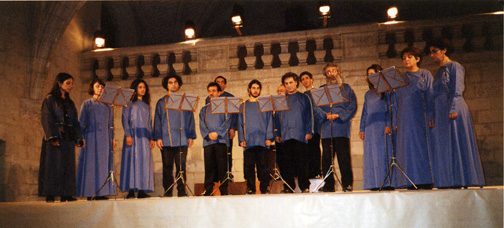
for all you bad, bad people out there (you know who you are), another gorgeous recording of Liturgical Chant from the first ever Christian state of Armenia. again google translates from French: "Akn aims to revive and develop the traditional interpretation of Armenian liturgical chant. The performances reflect the work developed under the direction of Aram Kerovpyan since 1990, which led to the creation of the Centre for the Study of Armenian liturgical chant, founded in January 1998 in Paris. ... traditional songs of the Armenian liturgy, including sharagan (hymns, tropes), form the body's largest directory. The psalmodie récitative and mélismatique, song of the Book of hours and optional melismatic singing, singing group or solo, are also part of the programmes submitted. Akn interprets this directory monophonic and modal in its original form. The drone is an integral part. Akn is a mixed choir, composed of 14 to 16 participants." -- http://akn-chant.org/fr

Akn - Chants liturgiques arméniens


download

Giacinto Scelsi - Music for Wind Instruments and Percussion

"This collection of the late Italian composer Giacinto Scelsi marks the recorded debut of many of his smaller works. Ranging from 1954-1966, Scelsi's elongated tonal studies are given a rapt performance here by a nameless Dutch ensemble that carries off the task without flaw or unnecessary adornment (a constant temptation, it seems, with Scelsi's work). Included here are three fragments of I Riti, the ritual march from the composer's Funeral for Achilles. Non-rhythmic timbral patterns, spare in posture and deep in resonance, constitute an interior motion. On Ko-Lho for flute and clarinet, from 1966, Scelsi concentrates on the variations in similar whole tones the instruments are capable of producing. These variations may be timbral, or that may be in the embouchure itself, but they sound at times so remarkably similar as they exchange semi-quavers that it is nearly impossible to tell them apart. Likewise, Rucke di Gluck for piccolo and oboe from 1957, while much more primitive in feel and approach, offers the turning of tone from one pitch to the next as a meeting place for timbral investigation. Also from tense, varying durational statements, harmony is explored not as a device for unification but rather as a spatial consideration of interstitial elements. The truly revelatory works occur near the end of the set with Hyxos for alto flute, gongs, and cowbell from 1955 and Quattro Pezzi for trumpet solo from 1956. In both these works, Scelsi looks past serialism's limited investigations of tonal dissonance and finds a type of consonance in duration and pitch without regard for scalar mathematics. These are gigantic leaps in the consideration of spatial relationships in compositional technique and sonic placement in the tonal one. This is a highly rewarding and necessary addition to the Scelsi canon, and an excellent introduction to the "aegis mysterium" that Scelsi created in 20th century music." --Thom Jurek, All Music Guide

1 I Riti: Ritual March, "The Funeral Of Achilles" For Percussion (1962) (Fragment) (0:57)
2 Ko-Lho For Flute And Clarinet (1966): I, II (7:13)
3 Pwyll For Flute Alone (1954) (4:15)
4 I Riti: Ritual March, "The Funeral Of Achilles" For Percussion (1962) (3:05)
5 Ixor For Bb Clarinet (Or Other Reed Instrument) (1956) (4:00)
6 Rucke Di Guck For Piccolo And Oboe (1957): I, II, III (8:56)
7 Hyxos For Alto Flute, Gongs And Cowbell (1955): I Tranquillo, II Con Moto, III Tranquillo (9:49)
8 Quattro Pezzi For Trumpet Alone (1956): I, II, III, IV (9:16)
9 I Riti: Ritual March, "The Funeral Of Achilles" For Percussion (1962) (Fragment) (1:14)

OUT OF PRINT

2008/05/04

Bismillah Khan & Vilayat Khan - A Rare Jugalbandi

"Tentatively titled 'A Rare Jugalbandi' the album brings together musical maestros Vilayat Khan with Sitar and Ustad Bismillah Khan with Shehnai. Recorded live in 1999, both the legends came together relaxing with Yaman Aalap." -- from musicindiaonline.com

a recording from very late period of these maestros, it does not match the sickness of the one several posts down -- but it it still a beautiful album and for those addicted to the sound of Bismillah's shehnai it is a treat.

find it at this new blog.

2008/04/27

rhythmicon.....

The Art of the Virtual Rythmicon
by Janek Schaefer and others
Label: Innova Recordings
Genre: Electronic
Photobucket
1 All Bombing is Terrorism 12:02
2 Annie Gosfield - A Sideways Glance from an Electric Eye 07:37
3 Philip Blackburn - Henry and Mimi at the Y 04:36
4 Jeff Feddersen - This Time I Want Them All 05:50
5 Matthew Burtner - Spectral for 0 04:44
6 Matthew Burtner - Spectral for 60 04:30
7 Viv Corringham - Eggcup, Teapot, Rythmicon 06:17
8 Mark Eden - Cremation Science 05:35
9 Robert Normandeau - Chorus 13:57


review:
Back in 1931, Henry Cowell asked Lev Termen [aka Leon Theremin] to build him a musical instrument capable of playing the sorts of complex overtones and rhythms that Cowell was working with at the time. The two of them came up with the Rhythmicon, a keyboard instrument a bit like an electric organ with a catch. Using sets of rotating optical discs inside the instrument all the keys were set up to play repeated tones, which were related in pitch and rhythm to one another according to the proportions of the overtone series. Very much a Cowell sort of idea it proved too unreliable to really take off as a concert instrument, but in 2003 American Public Media commissioned an online version for its American Mavericks website and radio show. The Virtual Rhythmicon – a greatly enhanced extrapolation of the original concept – has been online since then, and anyone can play around and submit the results to the American Mavericks archive. Mind you, I’ve had a good muck around on it and I’ve not produced anything that comes close to what’s on this album, so it’s not to be underestimated.

By the nature of the instrument, the nine tracks on The Art of the Virtual Rhythmicon are all built around sustained synth tones, wave forms, pulse patterns and the like, but with a notable emotional range. Schaefer’s work is a lush meditation paradoxically titled ‘All Bombing is Terrorism’, Gosfield deftly blends buzzing sawtooth waves with sweeping cello harmonics. Philip Blackburn samples a quarter-tone piano duet by Mildred Couper to evoke the concert where both her compositions and the rhythmicon were heard for the first time, while Jeff Feddersen samples Cowell’s voice over music designed to push the limits of the virtual rhythmicon to sonic breaking point. Burtner’s two contributions are dedications to his new-born son and his parents’ 60th birthday, producing rich sound worlds that belie their origins in simple algorithms, and Viv Corringham mixes her own voice, using everyday objects as resonators, over jangly, brassy blasts from the rhythmicon.

The two final tracks step furthest from the pure overtone beats of the rhythmicon medium. Mark Eden’s ‘Cremation Science’ is a Warhol-inspired pop collage, but the real gem of the whole disc is the final track, Robert Normandeau’s awesome ‘Chorus’, dedicated to the victims of 9/11. Using sound materials intended to represent Judaism (shofar), Christianity (bells) and Islam (muezzin), it’s a brooding concrete slab of a work in which menace, frustration,


r


enjoy.............

2008/04/16

white evil....

a favorite of mine....enjoy
Photobucket
RUTH WHITE - Flowers of Evil: An Electronic Setting of the Poem of Charles Baudelaire (Creel Pone)

Tracklisting:
A1 The Clock (3:00)
A2 Evening Harmony (4:02)
A3 Lover's Wine (2:57)
A4 Owls (2:45)
A5 Mists And Rains (2:06)
B1 The Irremediable (4:55)
B2 The Cat (3:27)
B3 Spleen (2:50)
B4 The Litanies Of Satan (6:50)

............to me, baudelaire's poems are of such unique power that they always seem to rise above the level of the personal and sometimes existential nature of their content. in this composition, i have attempted to parallel the transcendental qualities of the poetry through electronic means.

for the words, i used my own voice as the generator of the original sound to be altered or "dehumanized." this seemed practical since my experiments with the medium were too time consuming to have been easily accomplished with a collaborator.

to modulate my voice, i used a variety of techniques. changes of timbre were achieved with filters. tape speed changes were used to control pitch. into the shape of some words, i injected sound waves and white noise, thus changing the quality of their sound hut not the flow of their delivery. by adding reyerberation, i varied atmospheres and decreased or increased space illusions. to accent special words or phrases, i used controlled tape delays. choruses were created by combining slight delays with multiple track recordings.

the musical settings around the voice were made with music concrète materials, a moog synthesizer, other electronic generators and conventional instruments, which were usually altered electronically.

in the translations, there was no attempt to rhyme the verse as in the original french poems. i tried only to keep the language as direct and simple as possible, for i always found that the dominating power of baudelaire's ideas 'were in themselves of electrifying force.

ruth white


music and translations @ 1969 ruth white.


m

enjoy........

2008/04/10

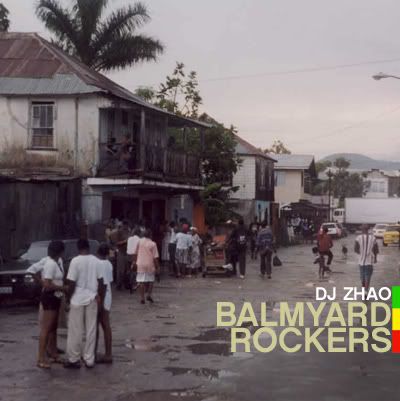
dj zhao - Balmyard Rockers


re-up with new cover for those who missed the bus last time round...

more than a few would agree that modern roots music have made a powerful comeback, after an entire decade or more of taking the backseat to dancehall ragga. this one is all about the conscious side -- a few of my favorite cultural "one drop" riddims from past few years, and a few all time classic cuts. (this is from 2 years ago and today i would have left out the tiny bit of junglism but whatever)

balmyard means a place of medicine, of magic and healing. this mix excludes slackness and gun talk almost entirely (only 1 tune - Cham, kind of heads in that direction, but not really); you will find no chi-chi-man bashing, no misogyny here.

01 Sophia George - Lazy Body
02 Washington Nooks - Can I Get A Witness [Onward Forward riddim]
03 Baby G - In The Streets [World Jam riddim]
04 Cham - Rude Boy Pledge [Stage Show riddim]
05 Version [Crystal Woman riddim]
06 Sizzla - I Wanna Know You [statement_riddim]
07 Sizzla - Jah Knows
08 Horace Andy - Good Will Survive
09 Braveheart - Oohhhh Ahhhh [Hard Times riddim]
10 Chuck Fenda - Jah is Worthy [Hard Times riddim]
11 i wayne - Rasta Tell Dem All the While [Hard Times riddim]
12 Horace Andy - Mek It Bun
13 Collie Buddz - Come Around [Last war riddim]
14 Alozade and Hollow - Under Me Sensi [Clappa riddim]
15 Congo Natty - Jah is My Guide
16 Cham featuring Mr Easy - Funny Man
17 Natural Black - Defend the Herbs [Defend We Own riddim]
18 Singer Blue - If I Know Jah
19 Lady Saw - Getting Hard [Confessions Riddim]
20 Kiprich - Tell Me [Confessions Riddim]
21 Unicorn - Remenber [Confessions Riddim]
22 Version [Confessions Riddim]
23 Sizzla - can not find this cut sorry
24 Selah Collins - Pick a Sound Version

ZSHARE or RAPID

2008/04/08

Bismillah Khan & Vilayat Khan

another repost: Bismillah Khan (shehnai) with Vilayat Khan (sitar) (and unknown tabla player) recorded in the early 70s for RCA, but was never released in the west. the friend in Singapore who gave it to me says it is the most famous jugalbandi in indian history. my friend goes on a bit about Vilayat (i was actually hoping to hear stories about Bismillah):

"Vilayat Khan was drunk beyond drunk during this session. he was a notorious drunk until 1981. when he quit drinking his music changed also, settled down. he said he couldn't play at that level if he could think, so he had to get shitfaced just to play that fast. a huge majority of indian musicians have hardcore drug/alcohol problems. when ali akbar khan was 12 he was already considered best in the world, but he later destroyed his playing from substance abuse.

vilayat khan was notroious though for giving shit to people. he cursed ravi shankar in public countless times. once threated to kill allah rakha. if rakha played a tabla solo during a session, he would say "you aren't playing for george harrison".

this concert in the recording, by the end of the night he doesn't give a fuck. he's playing all over everyone. bismillah will start a line and vilayat will just play over him. and play this dark, scarey ugly angry shit too. vilayat was as angry and insane as he played. also had the most incredible melodic style. never sloppy. his nephew is best sitarist alive today - shahid parvez, really graceful and clear.

i've got some vilayat khan from the sixties too where he's trying to kill the tabla player by playing at insane speeds, fastest i've ever heard a human play. to where it actually becomes a drone as you can't even hear the notes anymore. the only shit you can buy of his is all from the early 90's, ten to twenty years after his peak. it's still really good but no comparison to the earlier"

01 Bhairavi
02 Dhun
03 Nandkalyan

(sorry last song is cut off. i got it like that)

2008/03/27

dj zhao - submarine


BIGUP ICEY! BIGUP MELANCHOLY!
BIGUP LAPTOPS! BIGUP WHITE CUBES AND WHITE PEOPLE!

79 Minutes / 160 kbps / 91.2 MB

01 Soft Pink Truth
02 Komet
03 unknown
04 Jan Jelinek
05 Farben
06 Pheek
07 Andrew Pekler
08 Stewart Walker
09 Spiess, Peter F.
10 Thomas Brinkmann
11 unknown / Swim label
12 Closer Music
13 unknown
14 CheckSum
15 ø
16 Taylor Deupree
17 ø
18 Gramm
19 unknown
20 Gas
21 ø
22 unknown / Scape label
23 Aphex Twin
24 Thomas Koner

ZSHARE or RAPIDSHARE

Ab Baars Trio

i feel like first time i posted this was kinda slept on. a pretty remarkable and remarkaly varied document of this group. inventive, playful, sensitive, and such a crisp clarity in their enunciation of ideas...

(for The Jam™ check track 3 of disc 2)

bigup ∞ for information concerning these 2 discs (which turns out to be 2 separate albums + 5 songs from yet another):

AB BAARS TRIO:
Ab Baars - clarinet, tenor sax
Wilbert de Joode - double bass
Martin van Duynhoven - drums, percussion

CD1: "Songs" (GeestGronden 22, 2001)

1. Wai-Kun (5:17)
2. Indiaan (4:50)
3. Klawulacha (4:18)
4. Hevebe Tawi (4:20)
5. Cherokee (8:51)
6. Wolf Song (4:56)
7. Maliseet Love (3:52)
8. Song (1:53)
9. Jeux (4:22)
10. Clayaquot War (4:30)
11. Song (5:54)
12. Aotzi No-otz (4:15)
13. Meshivotzi No-otz (4:08)
14. Dsichl Biyin (3:49)
15. The Indians (5:43)

All compositions Ab Baars, exc. 2 by Guus Janssen - arr. Ab Baars, 5 by Ray Noble - arr. Michael Moore, 15 by Charles Ives - arr. Mariette Rouppe van der Voort.
Recorded by Dick Lucas DATA RECORDS 4 February 2000 Theater De Burcht, Zaandam.

CD2: "3900 Carol Court" (GeestGronden 12, 1992)

1. Kimmel (6:27)
2. Visser van Lucebert (5:16)
3. Trav'lin in Plastic Dreams (6:03)
4. Krang (7:57)
5. 3900 Carol Court (4:27)
6. Glorpjes (6:29)
7. Asor (3:13)
8. Farfalla di Dinard (4:36)
9. The Dutch Windmill (4:17)

All compositions Ab Baars, except 3 by John Lewis.
Recorded by Dick Lucas DATA RECORDS March 15, 1992 Theater a.d. Molenlaan, Bussum and March 20, June 7 and 18, 1992 the Bimhuis, Amsterdam.

"A Free Step | The Music of John Carter" (GeestGronden 20, 1999)

10. Juba Stomp (4:00)
11. Morning Bell (6:13)
12. Sticks and stones (3:46)
13. Karen on Monday (5:00)
14. Night dance (3:47)
(5 of 10 tracks)

All compositions John Carter, arr. Ab Baars.
Recorded by Dick Lucas DATA RECORDS January 25, 1997 Bimhuis, Amsterdam & April 23, 24, 1998 Polanentheeater.

disc 1 disc 2

2008/03/19

otte over, underwater


Hans Otte died December 25 2007 and it has taken me entirely too long to get this little memorial post together. I chose this release because I think it is somewhat atypical (the very New Age-y moments in Siebengesang) but also vivid in its beauty, which rests somewhat in opposition to the understatement and reduction of Otte's essential piano compositions, Das Buch der Klänge and Stundenbuch. The solo harp composition, Wassermannmusik quite easily stunned me on a first listen, and these recordings reveal an ecstatic element in Otte's work, an expansion on the minimal glow of the piano pieces.


Siebengesang (Seven-Song)
+
Wassermannmusik (Aquarian Music)

Hans Otte - Piano
Cecilia Chailly - Harp
Petra Wiegandt - Clarinet

aquarian music

2008/03/15

IMPORTANT QUESTION PLEASE HELP!!!

some PC users have said that a few or some of the files in the NGOMA mix does not work for them. if you have experienced this please let me know if possible which files are giving you problems, and what kind of problems.

thank you very much!!!!!

2008/03/13

re-ups and new up

i think it makes me a hippie to love Sandy Bull and you know what I am 1. not ashamed and 2. proud. no not the lazy and smelly part, but the peace, man, and the love and the drugs and the nudity. it is super fun to be naked in public. i suggest you try it if you haven't. maybe later today? how about right now? your co-workers will just think it's cute. trust me.

so really, whatever post-ironic badman attitude i happen to be copping for laffs this week or the other, deep down inside i just want to space out on some trippy sounds and colors and the patterns they make... that and for everyone to get 1. along and 2. high as a kite. (and if you don't like it you can go suck your mum)

in addition to the 2 Sandy Bull albums previous posted you will find a new one: Inventions

Sandy Bull - 3 albums
VA - The Masters of Gospel
more coming in the space below...

2008/03/10

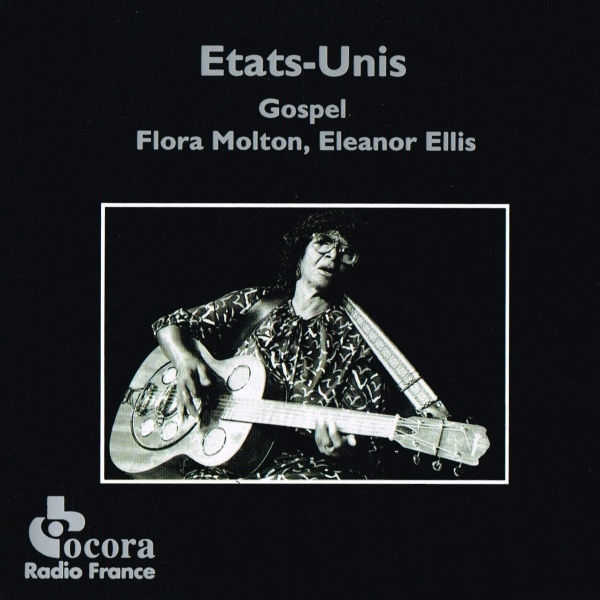
Flora Molton, Eleanor Ellis

heavy "blues gone to church" rootsy gospel. next to zero information on the web about this singer and her timeless music, some of the most heart felt and beautiful in the cannon. i think this is the only disc representing American music in the entire Ocora catalog -- and have to say probably as good a choice as is possible: stark and minimal. so true. so real.

from Spinning in the comments:

"Flora Molton used to play outside of the old Woodward & Lothrop department store in downtown D.C. - I remember stumbling out of the Metro exit and hearing her voice. it was a bitter cold day in December, shortly before Christmas. I think she was seated on a metal folding chair (the kind used at card tables), but am not sure if I'm remembering that correctly... You can read more about her here.

She had a cardboard sign of some kind, too... for donations, maybe?

A few years after I first heard her, I ended up working a few blocks down the street from Woodies. There was an elderly blind man who stood on the street corner day in and day out, singing a wordless moan - he and Flora were the last real street singers in D.C.

I don't know this man's name, and wish i had more appreciation for his singing, which was monotonous (he never varied the tune), wordless, high, keening, and ear-piercing. It was very difficult to block out the sound of his voice, especially when our office windows were open.

I am sure he's long since gone."

it don't get more real than that do it? a living national treasure. singing on the street with a cardboard sign for donations.

rapid one and rapid two

2008/03/07

rebecca rebecca rebecca rebecca

hey I got through what passed for winter this year, pretty much w/out giving proper love to this place. so, here is, I hope, a treat.

to the best of my knowledge these recordings are apocryphal (but no less tasty for it).


the lovely lovely kai fagaschinski on clarient, michael renkel on guitar/preparations.

here's the lowdown.

rebecca exists since october 2001. the work began with improvisations. over the cause of time the same piece was repeatedly "improvised" again, reducing the concept of improvisation to absurdity. through repeated playing a musical piece, a composition come into being. the piece is not notated. rebecca remembers, and forgets. it is not so much a matter of interpreting a preconceived idea but rather of continuously working on and within the piece. the musical work becomes practice, action.
because the same piece is played over and over again in variations, piece and musician merge into a process. the concept of return is also hidden in the name ("re"). less obviously, "bec" (back) refers to the act of remembering, while "ca." (circa) stands for the vague, the indeterminate. this rotating around oneself and remembering as a means of drawing from the past, however, both aim at forward movement and outward communication. repetition as memory facing forward.


I think that is awful nice, and allows for sensitive, concentrated playing - a musical relation b/w the performers that is palpable - improvisation not simply being about showing up, skronking, wheeezing, scraping, clicking about and taking yr applause w/seriousness.

RE
BEC
CA

2008/03/02

Pandit Kamalesh Maitra - Tarang

Born in 1928 in the East Bengali part of North India, the musician, composer and teacher, Pandit Kamalesh Maitra, has been living in Berlin since 1977. He may be the last and greatest master of the tabla tarang, a nearly forgotten classical instrument from North India. He has played with musicians as eminent as Ravi Shankar, Ali Akbar Khan, Trilok Gurtu, Charlie Mariano and Giora Feldmann.
... In the long history of Indian percussion, (the Tabla Tarang) evolved rather late but, in spite of its magical sound, has not shared the public appeal of complex "classics". It is made up of 10 to 16 single tabla-drums, tuned to the traditional raga scales and placed in half a circle in order of rising pitch. Tarang means waves and aptly describes the sounds evoked by the drummer. Quickly and suggestively, notes group into melodies and continually new cadences. The tabla tarang sounds rather like a marimba with a hint of gamelan and the resonance of a deep vibraphone. - Gabriele Stiller-Kern / full article here.

his popular recording is "Tabla Tarang - Melody on Drums". this one here, courtesy of Ambrose Bierce (who may have seen this concert with his own eyes?), is as far as i know not commecially available. (and incidentally, the House of World Cultures where this was recorded, is the place where we are planning a summer time NGOMA. fingers crossed!)

Pandit Kamalesh Maitra - Tarang
Live at the House of the Cultures of the World, Berlin, November 5, 1993
Kamalesh Productions CD9802, 1998

Rapidshare
Zshare
and here is an example of the Tabla Tarang performed:

2008/02/29

Mbilia and Mpongo

hate to invoke the somewhat cliche adage of the first world making depressive, whiny pop music, and the third world expressing nothing but unadulterated and unstoppable JOY through their celebratory grooves... but it's often true isn't it. in the words of my friend ivan: "it's like, we know life is hard, and there ain't much we can do to change lots of shit, so let's get this party started, NOW. no, not 10 minutes later. NOW."

both of these vocalists are relatively new to me, and i don't know much about them at present time other than the to-die-for voices -- Mbilia is like a high alto or soprano, and Mpongo is a deeper, at times richer alto. both of these albums, picked entirely randomly from my small growing collection of their surely immense discography, came out in the 80s. but where as a lot of western pop productions from the 80s favored a palette of sounds particular to that era, these albums, to me at least, represent a much more timeless approach to pop music. i was listening to one of these while jogging the other day... bliss on the tracks (even as my ganja riddled lungs were trying to keep up).

M'bilia Bell - Boya Ye - Ba Gerants Ya Mabala

rapidshare part 1 rapidshare part 2
zshare part 1 zshare part 2

Mpongo Love - Monama Elima vol 1

zshare
rapidshare

2008/02/27

NEW BLOG ALERT

i will still give a shout out here when something important happens, but from now on for all things NGOMA goto:

AFROASIASOUND.blogspot.com

all of my personal DJ-mixes prior to NGOMA will be added there soon too.
________________________________
by the way, bb, grasp, tom, if you have any personal or otherwise links you'd like to put up let me know.

and the new look OK for you? is it too blue????????

2008/02/22

Kayagum.........

Korean Kayagum Music: Sanjo
Photobucket
Artist: Chukp'a and Kim Tong Jun


1 Minsok P'unru 8:49

2 Kayagum Sanjo 52:56

Performed by Korean national treasure Chukp'a on kayagum, accompanied by changoo player Tong Jun Kim, both recently deceased. excellent.....

r

enjoy..............

2008/02/05

NGOMA FEB 23.

thanks to everyone who came out! i played harder and colder than usual, with no bongo flava, kizomba, or bhangra... was an experiment in afro-techno and bass musics. Lateef brought mad flavors... the fiery, timeless shit... oh man just thinking about it makes my knees go weak! party pictures here: afroasiasound.blogspot.com/

2008/01/30

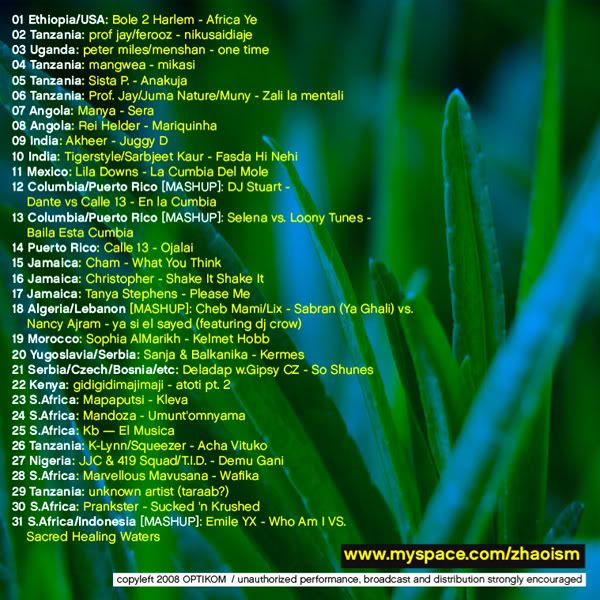
NGOMA mix 1 - dj zhao


The positive side of globalization: irresistable 21st century urban music arise on every continent. India, Cuba, Tanzania, Egypt, Cape Town, these are just a few places where wild hybrid styles are born: futuristic, bass heavy and electronic, yet drawing from the wealth of local musical heritage. the NGOMA series bring the heat from musical hotspots across the known world -- the wickedest beats and sweetest flows.
_______________________________________________
DIRECT LISTEN AND SINGLE TRACK DOWNLOAD (192k)


SEPARATE TRACKS DOWNLOAD (320k):

rapidshare or megaupload

2008/01/15

Fistfull of Improvisation 1


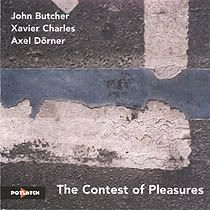
John Butcher (saxophones)
Xavier Charles (clarinet),
Axel Dorner (trumpet)
The Contest of Pleasures
http://rapidshare.com/files/49927730/ButcherCharlesDorner_ContestPleasures.part1.RAR
http://rapidshare.com/files/49928922/ButcherCharlesDorner_ContestPleasures.part2.RAR
Some intensely oblique textural nu-school shit. Recorded....hm....1997? 2000 at latest. Sharp if not prescient. IMHO, some of the strongest, or at least most wondrous, group material by any of the participants. A must-hear even if you usually don't care for the improv thing based on preponderance of squiggle-blat, almost all of which has been erased in advance by the participants. Scary-incisive groupmind energy. Keeper!


Gunter Christmann (trombone/cello) & Thomas Lehn (analogue synth):
Temps Duree (1998, ltd ed of 150)
http://rapidshare.com/files/933906/ChristmannLehn.zip
light-speed and prickly-as-fuck. hard to place what makes this record special aside from the excellent playing, but it is definitely not a matter of just fine playing...the quickness here, the jabs and feints familiar to those of us who have listened to (probabably too much) "European free improv" quite a bit....these are here, but the moments of interaction seem to be packed especially dense..

Giuseppe Ielasi: solo live cdr (Absurd)
http://rapidshare.com/files/2656416/GI_solo2001.zip
This is nothing but nothing like Ielasi's more recent work, a much more spartan affair; those who like the quiet Kevin Drumm might find a lot to like here. I think this was released c. 2000, maybe a little earlier. I uploaded it quite some time ago, but the link still seems to work.


Taku Sugimoto: OPPOSITE

http://rapidshare.com/files/826675/SugimotoOpposite_pt1.zip
http://rapidshare.com/files/826901/SugimotoOpposite_pt2.zip
Gossamer dew-speckled-spiderweb guitar spun with patience you could cut with a very sharp knife. I know we had this here at some point, but it's an old upload of mine, it's good quality, I think (mp3-320?), and if you haven't heard it yet, you must, must, must.

2008/01/12

From Tanzania with Love Love Love

to counter all that negative energy in the Dirty South mix, here is one for grace and groove and love and light.

all the confusion is over. DJ Rhamadan straightened me out: it's a group called Melody from Zanzibar (no not Tanzania), and it is a good example of modern tarab.

rapidshare or mediafire

2008/01/03

P(c)P: Full Flutes

So P(c)P: not the party, but still the trace of angels: Point (counter-)Point: a little name-branding for an ongoing category in which I put up a couple-few recordings or so that somehow to me seem like stealth fellow-travellers, worthy adversaries, or twins separated at birth. No implications about deeper connections, which might or might not exist or even be decently phantasizable, but sometimes an intersection---if only in my wayward hearing---is just serendipitous to call for passing-along. So I pass along! I swear, commentary about putative connections will be kept to a dead minimum, so as to avoid advertising a musicological competence that I most certainly do not possess. But if it's bomb, how can I not bell about it?

Sacred Flute Music from New Guinea: Madang, Volumes 1 & 2
http://www.megaupload.com/pt/?d=J2S07AG5 (both volumes, 199mb, mp3-320-LAME)

A few words on Vol. 1:
"Meant to evoke the cries of spirits, sacred flutes are played by adult men of the Madang region of Papua New Guinea. Pairs of long bamboo male and female flutes accompany ceremonies in the coastal villages near the Ramu River. The ravoi flutes from Bak are supported by two garamut carved wooden slit gongs; the waudang flutes from Manam Island are backed up by a pair of large and small slit gongs, and six singers, and the jarvan flutes from Awar feature accompaniment by a shell rattle. The mo-mo resonating tubes were recorded in the Finisterre Range. These recordings were made in 1976 by Ragnar Johnson assisted by Jessica Mayer while conducting research in a remote village in the Eastern Highlands. Their intention was to preserve this traditional music as it is played in the villages of its origin."
Those heard:
Vagh & Gombreh / Soagili & Ururu / Jogun & Sabina / People of Damaindeh-Bau

A few words on Volume 2: "Sacred flutes are blown ("Windim Mambu") to make the cries of spirits by adult men in the Madang region of Papua New Guinea. Pairs of long bamboo male and female flutes are played for ceremonies in the coastal villages near the Ramu River. There are the cries of six different pairs of flutes and one pair of conch shells from the Ramu coast, two pairs of Waudang flutes from Manam Island with singing and Mo-mo resonating tubes from the Finisterre Range. Occasional percussion is provided by wooden slit gongs and hand drums. These recordings were made in 1976."

A graspnote:
I was initially drawn to these recordings because Evan Parker cited them as key recordings of "ethnic"/traditional music practices for him, with the use of overtones and harmonics being particularly instructive to him in his own explorations of the saxophone. Turns out, Evan is credited in some respect with the reissue of these recordings, both of which were first released in 1977 and 1979 as the first two numbers of David Toop's Quartz label. I think these are amazing sounds and ways of organizing them; I think it's worth hearing both volumes (on repeat!), so I packed them together...hope this won't be too much of a problem. Hypnotic, understated, bracing, raw, elliptical and full.

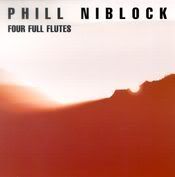
Phill Niblock: FOUR FULL FLUTES (the Dirty Version)
http://rapidshare.com/files/80210854/Niblock_FullFlutes_APE.part1.RAR
http://rapidshare.com/files/80210600/Niblock_FullFlutes_APE.part2.RAR
http://rapidshare.com/files/80209585/Niblock_FullFlutes_APE.part3.RAR
http://rapidshare.com/files/80208635/Niblock_FullFlutes_APE.part4.RAR
http://rapidshare.com/files/80207765/Niblock_FullFlutes_APE.part5.RAR
(APE lossless, tracks already split, no CUE)

Phill avec filles....um.... [filles: Dana Reitz and Joan La Barbara, 1975]

A little hype:
"This CD was released by Experimental Intermedia Foundation in 1990 and includes Susan Stenger playing flute on two tracks. The scores were recorded using musicians playing instruments tuned to an oscilloscope in microtonal intervals; in this fashion Niblock creates "tone blocks" by editing out breathing spaces and assigning different pitch blocks to selected areas of the final eight-track recording. An photo of the incredibly arcane-looking scores for the three individual pieces is included in the extensive liner notes. One of the four tracks is actually the combination of the solo recordings by Stenger and Petr Kotik; the listener is encouraged to mix and match tracks on their own...." (lost source online...apologies)

“Phill Niblock’s music has no precedents, invites no comparisons, and doesn’t even suggest any metaphors to me. It is simply itself and must be heard to be believed,” wrote Tom Johnson in The Village Voice a decade ago. The same is true today—no one is doing what Phill Niblock is doing. Niblock takes the building blocks of music and stacks them in inimitable formations. In Four Full Flutes, adjacent tones beat violently against one another while clouds of harmonics hover above the wavering drone . . . When the piece ends, it takes the listener a few moments to recover. This physiological experience, when the ossicles slow their vibrating and the membrane hairs come to a standstill, is probably the only aspect of the music not regulated by the score . . . Playing this compact disc in a different room or moving around the room while the disc is being played actually alters the outcome. Similarly, the music can be experienced anew through different combinations, extra speakers, home stereo pyrotechnics, and volume level alterations. The effects intensify with louder levels of volume. The higher the volume goes, the higher you go. ” – Neil Strauss


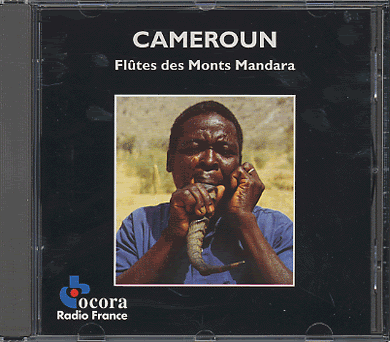
CAMEROON: FLUTES OF THE MANDARA MOUNTAINS
(Ocora: Radio France 560110)
http://rapidshare.com/files/80193545/Cameroon_FlutesMandara_Ocora.part1.RAR
http://rapidshare.com/files/80192163/Cameroon_FlutesMandara_Ocora.part2.RAR
(mp3-320-LAME)

Recordings made in Cameroon, 1994-6, by Nathalie Fernando, Fabrice Marandola

From the liner notes:
In this presentation of music of the animist peoples of the mountains and the the plains, we selected the most commonly found instrumental ensembles along with encounters of a more singular kind, proposing an instrumental and vocal range, representative of the multitude of sonorities, languages, and customs to be found in this region. The musics recorded come from ritual or profane repertoires, and do not necessarily accompany dancing. In the Mandara Mountains, the musical instruments used depend on the agrarian cycle, their playing being determined by different stages in the growing of millet: the Ouldeme flutes, for example, are played in turn for sowing time at the end of the harvest.

For information and photographs of some of the instruments used by these musicians, and other similar instruments, go to:

http://www.sukur.info/Music/Aerophones.htm

Take Cover

Take note that Susan Archie, who handled the design of this package, was also the svengali behind the amazing-looking Albert Ayler and Charley Patton boxes from Revenant (I think I'm right about this...not going to check now); her work is so fine, to my own taste, that the wickedly timely sounds are beyond-done-justice. I only say this because this small, support-worthy label seems to have gone all-out in creating a product worth hanging on to. But this is no lecture, just a public service announcement. As for the music....


PEOPLE TAKE WARNING! Murder Ballads & Songs of Disaster 1913-1938
(Tompkins Square Records, 3CD box set, 2007)
http://rapidshare.com/files/79745440/PeopleTakeWarning.part1.RAR
http://rapidshare.com/files/79743819/PeopleTakeWarning.part2.RAR
http://rapidshare.com/files/79741141/PeopleTakeWarning.part3.RAR
(mp3-vbr, no booklet art, unfortunately...folder slightly mistitled, oops)

Label description:
“In the late 1920’s and early 1930’s, the Depression gripped the Nation. It was a time when songs were tools for living. A whole community would turn out to mourn the loss of a member and to sow their songs like seeds. This collection is a wild garden grown from those seeds.” – Tom Waits, from the Introduction

Songs of death, destruction and disaster, recorded by black and white performers from the dawn of American roots recording are here, assembled together for the first time. Whether they document world-shattering events like the sinking of the Titanic or memorialize long forgotten local murders or catastrophes, these 70 recordings – over 30 never before reissued – are audio messages in a bottle reflecting a lost world where age old ballads rubbed up against songs inspired by the day's headlines.

Featuring beautifully remastered recordings by the some of the cornerstones of American vernacular recording such as Charlie Patton, Ernest Stoneman, Furry Lewis, Charlie Poole and Uncle Dave Macon, these songs tell of life and death struggles forever immortalized on these rare and compelling 78 rpms. Produced and annotated by the Grammy winning team of Christopher King and Henry “Hank” Sapoznik with an introduction by Tom Waits, the accompanying 48-page three-CD anthology designed by Grammy award winning Susan Archie brims with many eye-popping historic images never before reproduced.

TRACK LISTING:

Disc 1: Man vs. Machine
1. Titanic Blues - Hi Henry Brown & Charley Jordan
2. Wreck Of The Old 97 - Skillet Lickers
3. Bill Wilson - Birmingham Jug Band
4. The Crash Of The Akron - Bob Miller
5. The Fate Of Talmadge Osborne - Ernest Stoneman
6. El Mole Rachmim (Fur Titanik) - Cantor Joseph Rosenblatt
7. The Wreck Of The Virginian - Alfred Reed
8. Fate Of Will Rogers & Wiley Post - Bill Cox
9. Down With The Old Canoe - The Dixon Brothers
10. Wreck Of Number 52 - Cliff Carlisle
11. Kassie Jones Part 1 - Furry Lewis
12. Kassie Jones Part 2 - Furry Lewis
13. The Brave Engineer - Carver Boys
14. The Sinking Of The Titanic - Richard Rabbitt Brown
15. Fate Of Chris Lively And Wife - Blind Alfred Reed
16. Wreck On The Mountain Road - Red Fox Chasers
17. The Unfortunate Brakeman - Kentucky Ramblers
18. Altoona Freight Wreck - Riley Puckett
19. The Fatal Wreck Of The Bus - Mainer's Mountaineers
20. Last Scene Of The Titanic - Frank Hutchison
21. Casey Jones - Skillet Lickers
22. The Wreck Of The Westbound Airliner - Fred Pendleton & The West Virginia Melody Boys
23. The Titanic - Ernest Stoneman
24. When That Great Ship Went Down - William & Versey Smith


Disc 2: Man Vs. Nature
1. The Story Of The Mighty Mississippi - Ernest Stoneman
2. Mississippi Heavy Water Blues - Robert Hicks (Barbecue Bob)
3. Dixie Boll Weevil - Fiddlin' John Carson
4. Mississippi Boweavil - Charley Patton
5. Ohio Prison Fire - Bob Miller
6. Memphis Flu - Elder Curry
7. Explosion In The Fairmount Mine - Blind Alfred Reed
8. Storm That Struck Miami - Fiddlin' John Carson
9. When The Levee Breaks - Kansas Joe & Memphis Minnie
10. Alabama Flood - Andrew Jenkins
11. Burning Of The Cleveland School - J. H. Howell's Carolina Hillbillies
12. High Water Everywhere, Part I - Charley Patton
13. High Water Everywhere, Part 2 - Charley Patton
14. Ryecove Cyclone - Martin & Roberts
15. McBeth Mine Explosion - Cap, Andy & Flip
16. Dry Well Blues - Charley Patton
17. Baltimore Fire - Charlie Poole
18. Tennessee Tornado - Uncle Dave Macon
19. Dry Spell Blues, Part 2 - Son House
20. The Santa Barbara Earthquake - Green Bailey
21. The Death Of Floyd Collins - Vernon Dalhart
22. The Porto Rico Storm - Carson Robison Trio
23. Boll Weavil - W.A. Lindsey & Alvin Condor
24. The Flood Of 1927 - Elders McIntorsh And Edwards

Disc 3: Man vs. Man
1. Peddler And His Wife - The Appalachia Vagabond (Hayes Shepherd)
2. The Little Grave In Georgia - Earl Johnson
3. Kenney Wagner's Surrender - Ernest Stoneman
4. Henry Clay Beattie - Kelly Harrell
5. The Murder Of The Lawson Family - Carolina Buddies
6. Ommie Wise - Clarence Ashley
7. Railroad Bill - Will Bennett
8. Frankie - Dykes Magic City Trio
9. Trial Of Richard Bruno Hauptmann, Part 1 - Bill Cox
10. Trial Of Richard Bruno Hauptmann, Part 2 - Bill Cox
11. Lanse Des Belaires - Dennis McGee & Ernest Fruge
12. Darling Cora - B.F. Shelton
13. Billy Lyons And Stack O' Lee - Furry Lewis
14. Tom Dooley - Grayson And Whitter
15. The Story Of Freda Bolt - Floyd Country Ramblers
16. Pretty Polly - John Hammond
17. Fingerprints Upon The Windowpane - Bob Miller
18. The Bluefield Murder - Roy Harvey & The North Carolina Ramblers
19. Frankie Silvers - Ashley, Clarence And Gwen Foster
20. Fate Of Rhoda Sweeten - Wilmer Watts
21. Dupree Blues - Willie Walker
22. Poor Ellen Smith - Dykes Magic City Trio