Showing posts sorted by relevance for query ocora. Sort by date Show all posts

2009/01/29

Ocora: Africa part 2 (all re-upped)

not much time for words but i hope the following quality vinyl rip of these out of print and super rare Ocora records themselves is enough. big thanks to Op and Goldfinger.

back cover
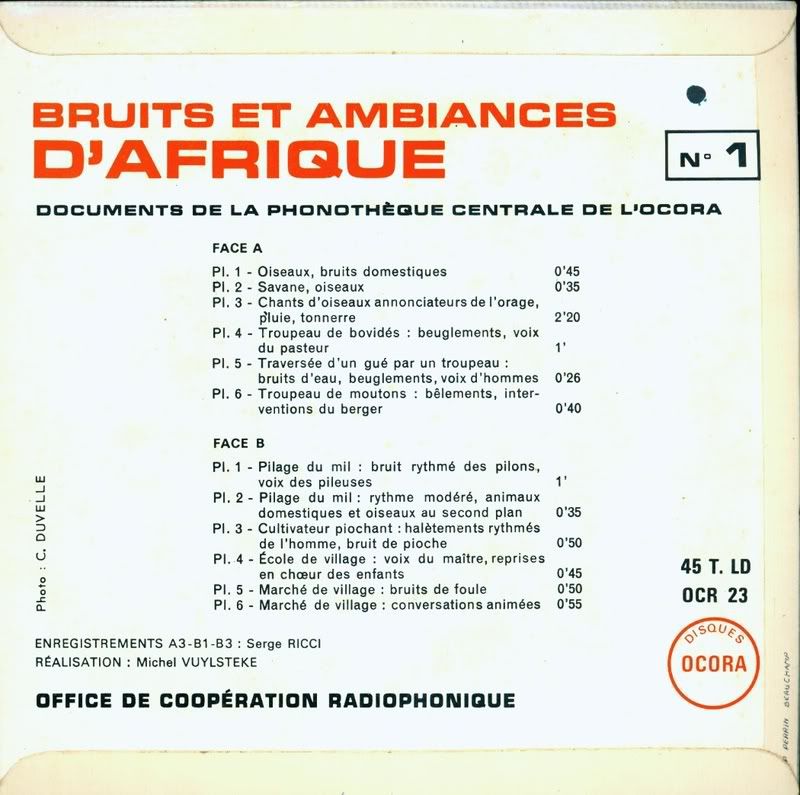
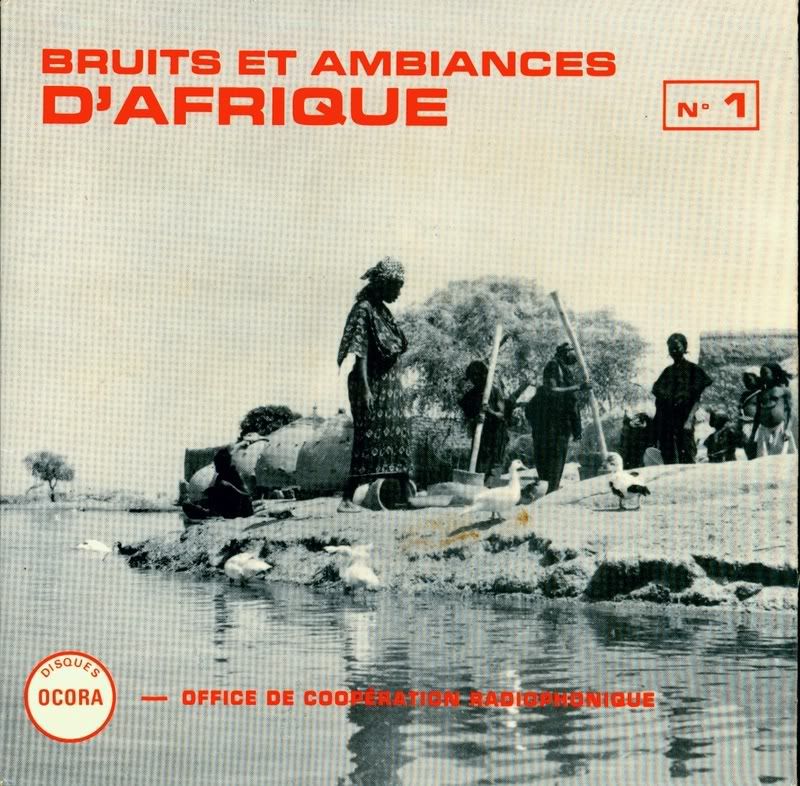
Bruitset Ambiances d Afrique One


back cover.
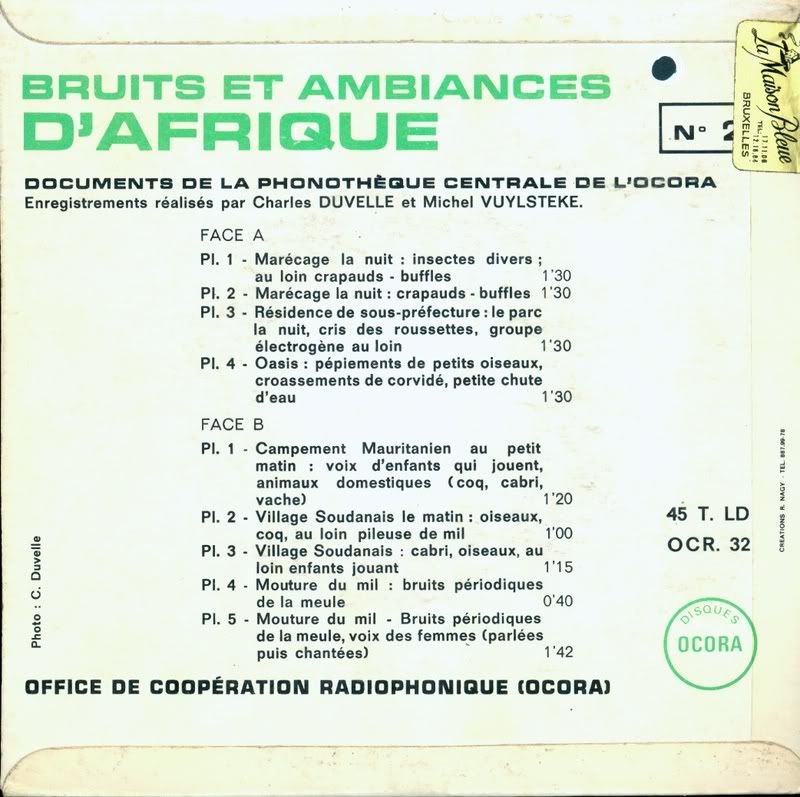
Bruitset Ambiances d Afrique Two


ocora Africa Anthologie de la Musique du Niger

2008/11/03

Ocora: Africa part 1

fact that i posted the first Ocora focus on Africa on THE HISTORIC DAY is pure coincidence. i swear it.


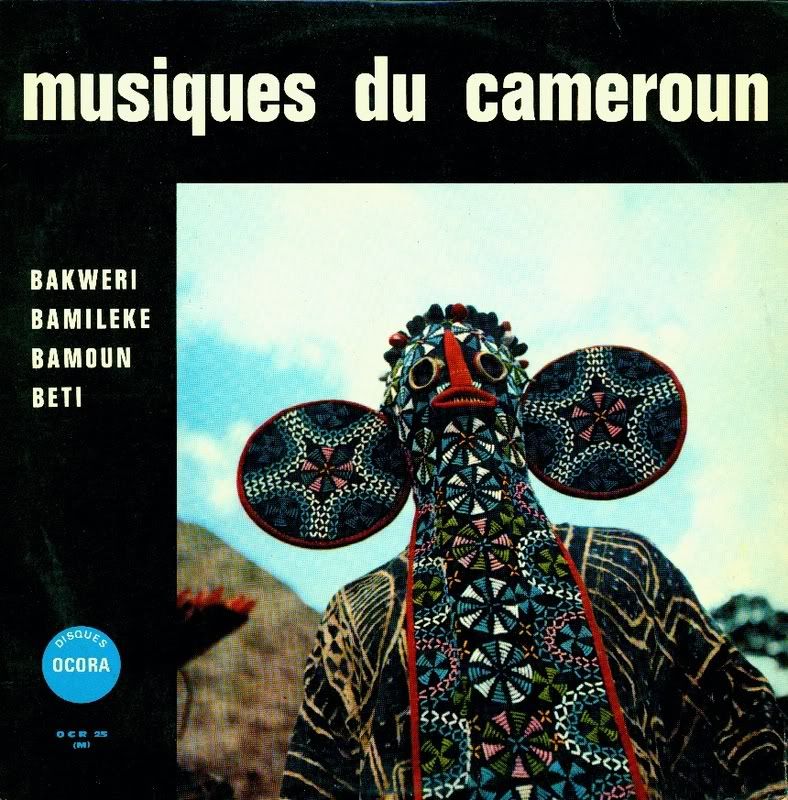
Musiques du Cameroon - Bakweri Bamileke Bamoun Beti

thanks to Op for ripping this very rare vinyl from the original Ocora catalog (never reissued on CD)

Marimba and non-melodic percussion pieces reveal intricate collideascopic latice works; chants and song whose purposes are lost to me (love? work? celebration? mourning?) tell their elegant (and to me, mysterious) tales. some selections are one or the other, some are voice with drumming combined; and flutes show up later on.

the clearly advanced yet intuitive mathematics demonstrated in some of this music is truly mind boggling. if any modern persons still (and I'm sure do) look down on this music, dismiss it as "primitive", and feel superior in relation to it, well this can only be demonstrative of his own ignorance, stupidity, and under-developed sense of beauty.

above is just my passing impression, the complete scans of the sleeves with detailed notes are included.

Mediafire: Part A, Part B
Rapidshare: Part A, Part B


Burundi - Musique Traditionelles

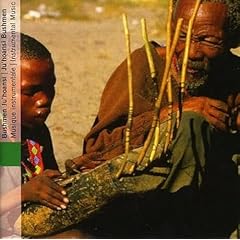
a whispered low-register male voice opens this collection accompanied by the dull and rich sounds of a plucked string instrument: in my imagination it is the dude on the cover, singing ghost stories to little ones or recounting the treacherous glories and loss of some past war. many vocal pieces follow, with or without back-up, varying greatly in tone, character, and style. 2 pieces whose title begins with "Akazehe" for young women stand out: so pretty and fragile. but many other highlights through out: gorgeous solo flute, epic chants with a large ensemble, the voice from track 1 comes back, perhaps even more sinister. and last but certainly not least: a child's voice beautifully weaving in and out of the ringing plings and plongs of some ancient guitar (surely with a great hollow body).

(a few of these i think will show up in FUSION PART 2 - underpinned by digital bass wobble :)

Mediafire: Part A, Part B
Rapidshare: Part A, Part B

2008/05/12

OCORA: India part 1

i have a crazy and over ambitious idea to upload and make available the (very near) entirety of the Ocora catalog (400+ including the very rare early vinyl-only releases) on this here blog. a monolithic task, and I will likely die of old age before it is complete, so let's get this party started PRONTO. (in reality what will likely happen is the uploading of what i consider the Crème de la Crème...)

lately I have been listening to a lot of the recordings from India, so it is i s'pose as good a place as any to jump in - here are 4 + 1 from the past, with much more come.

"Balaram Pathak is a very peculiar sitar player. After many years of listening to Indian classical music I have never come across someone of this style. The use of flageolett technique is typical for his way of playing - something I have never heard with any other sitar player.

Even though I searched for long in India and in Europe I couldn't find further recordings of Balaram Pathak (other than the original Ocora Double LP of which this is a CD re-issue, which had one more Raga), and although the booklet says he lives in Delhi since 1981, nobody I asked there had ever heard of him. Strange, I thought, since he is definitely a true master of sitar. All I could think of is that some people take great caution to prevent him from playing on stage and recording music in India.

Actually there is some kind of "music mafia" in India, very active in this field. They don't let anyone come up from outside their own circles. I was told the great sarod master Amjad Ali Khan was sort of the head of this "mafia". If you don't bow to him, you'll never find a chance to record in India, since any company would have to face that Amjad Ali Khan and his circle would never record for them anymore - and his CDs and cassettes bring good money." -- Ambrose Bierce (to whom we owe the original rip)

Inde du Nord / Balaram Pathak

1. Raga Bilaskhani Todi - Alap, Jod, Gat (Rudratal)
2. Raga Kinari Bhairavi - Alap, Jod, Jhala, Drut Gat (Tintal)
3. Raga Mishra Pilu - Alap, Sitarkhani Gat (Adhatal)

Balaram Pathak - sitar
Vinode Pathak - tabla

and speaking of the God Father of the Indian Classical Music Mafia, here is the O.G. son of a bitch himself. (original upload also from Ambrose)

"Mian-ki-Malhar is a rainy season raga composed by the great North Indian composer Mian Tansen. It is to be played in the late night, or, during the rainy season, at any time of the day. Its associations are depth, seriousness, and a majestic and heroic demeanour. Its ascending scale is pentatonic, the descending scale is heptatonic.

Zilla-Kafi is a mixed raga of recent origin, and it is here used as the basis for a raga-mala ("garland of ragas"), where many different scales are used in succession"

Inde du Nord / Amjad Ali Khan

Amjad Ali Khan - sarod
Shafat Ahmed Khan - tabla

"Born in 1927 in Rajasthan's Udaipur, his father was a musician "at the court of the Maharaja of Udaipur" who played the dilruba, described in the notes as "a sort of cross between the sitar with its movable frets and the sarangi with its bow," who "worked out a special and rather unusual fingering technique for his son . . ." to play the sarangi, starting at age 6. Ram Narayan pioneered the use of the sarangi as a classical solo instrument. Ram Narayan studied as a child under a local sarangyia and also learned dhrupad, "a hieratic and sober genre from which khyal originated," with the famous Dagar brothers (cf. Music of the World CDT-114). "The essential approach of dhrupad stands out in the alap elaboration more particularly." At 16 he was seeking employment at All India Radio in Lahore as a vocalist, "a ploy to increase his chances of employment. The producer he met did not take long to notice the scars on his nails, which he knew at once were the result of intense sarangi practice (from 10 to 16 hours a day)." " -- Arcturus, original uploader.

"By the time he was just 14 years of age, Ramnarayan was a music instructor in a college in Udaipur; and by the time he was barely 16 years of age, he was appointed staff artiste by the All India Radio and posted in Lahore in undivided India. This was in 1943. By 1947, Ramnarayan had accompanied some of the foremost male and female classical singers of the time. His playing was both inspired and inspiring. He was able to spontaneously improvise as well as reproduce tonal nuances of the singers he accompanied. He played in the style of their ‘gharana’ and made the sarangi both speak and sing in what we may now call, in retrospect the ‘gayaki ang’. . . .

He decided to become a free-lance sarangi artiste in Bombay where he could make himself financially independent by playing for commercial cinema as well as by cutting discs of his own. He recorded his first 78 r.p.m disc in 1950 with His Master’s Voice (now EMI) in Bombay. It is now a collector’s item with its beautiful rendering of the ragas Lalit and Marwa.

When Ramnarayan arrived with his sarangi in Bombay, film music directors did not know the potential of the sarangi. When he left the commercial film industry a few years later, music directors wondered what they would do without the sarangi of Pandit Ramnarayan. But Ramnarayan’s sight was set on something else that no one at that time thought was possible. His brother, Chaturlal accompanied Ali Akbar Khan on his pioneering visit to the West. Yehudi Menuhin welcomed and introduced them in the historic album “The Music of India”. In 1964, Ramnarayan and Chaturlal toured Europe and created a sensation." -- author unknown

"At first a rather coarse affair, the sarangi has become through the ages a sophisticated bowed instrument whose imitative capacity to reproduce the sound and texture of the voice is without comparison. Hence its use for accompanying singers... Its actual shape and structure probably date back to the 14th Century and it is mentioned in a 16th Century text. Successive improvements came later.

Its technique is unique in the fact that the back of the nails glide along the three gut strings placed 1 centimeter above the neck, which allows all types of phrases characteristic of Hindustani music: meend, which are glissandos prevalent in dhrupad, and gamakas, which are oscillations made around the notes and widely used in khyal. (Talc powder is used in order to ease the gliding of the palm on the side of the neck).

The gliding of the nails on the strings gives in the slow tempi a special flavour and much precision in the production of a continuous sound and it also enables the performer to display great virtuosity in rapid tempi.

The perrenial charm of the sarangi lays in its sympathetic strings. Of all the the Indian instruments which have them (like the sitar and the sarod), it is the one that creates a halo of sounds for the most part continuous and integrated in the melodies, this being due to the everlasting vibrations emitted by the friction of the bow. The considerable umber of metallic strings further increases the resounding force (as compared to the 11 or 15 sympathetic strings of the sitar and the sarod). But their role is not confined in enriching the general sound effect: when perfectly tuned, they give a useful harmonic reference in order to reach the right notes as they start vibrating only on the impulse of the notes played on the frequency which correspond to any of them.

1. Rag Purya-Kalyan: Alap, Jor, Jhala
This traditional rag is played in the evening.

This noble and sometimes austere rag shows also a feeling of tenderness. It is rendered here in a very classical way, according to the melodic laws ruling it. The third and seventh notes are particularly important. The gentle strokes of Ram Narayan's bow gradually bring out the typical phrases of the rag (rupa), first in the slow and non-rhythmic alap, second, in the jor with the increasing speed of the tempo, third, in the very fast taan-s of the jhala (23'45 onwards).

2. Rag Purya-Kalyan: Bandish (Teental), Drut (Ektal)
A bandish is a composition for singing. This term can be applied to the sarangi as it is so associated with singing."

-- from the cd notes by Christian Ledoux. and here is wiki on sarangi

Inde Pandit Ram Narayan Vol. 1

alternate MEDIAFIRE LINK

Ram Narayan: sarangi
Suresh Talwalkar: tabla

recorded Paris 1978 & Bombay 1979


"The soundtrack of Satyajit Ray’s famous film, with top musicians like Vilayat Khan (sitar), Bismillah Khan (shenaï oboe), or Imrat Khan (surbahar)." -- from liner notes. this one is a lot more lively, even aggressive, than the others...

Inde Le Salon du Musique

just a reminder billybilly brought us this bad ass recording a while back. find it here.

2008/09/02

OCORA: VIetnam

ok back on course. my rapid account ran out and i can't renew it right now because i lost my credit card and the new one will not arrive for blah blah blah. so much for seeing the entire OCORA catalog neatly listed in my rapid folder... oh well when life hands you a lemon -- use mediafire.

3 pretty different recordings of music from Vietnam. the Celestial Harmonies "Music of VIetnam" series is superb as well, covering dimensions not included in these. maybe we'll get to that at some point.


Tran Van Khe - lute, zither, ceremonial drum
Tran Quang Hai - spoons, sapeke clappers
Tran Thi Thuy Ngoc - wood block

mediafire


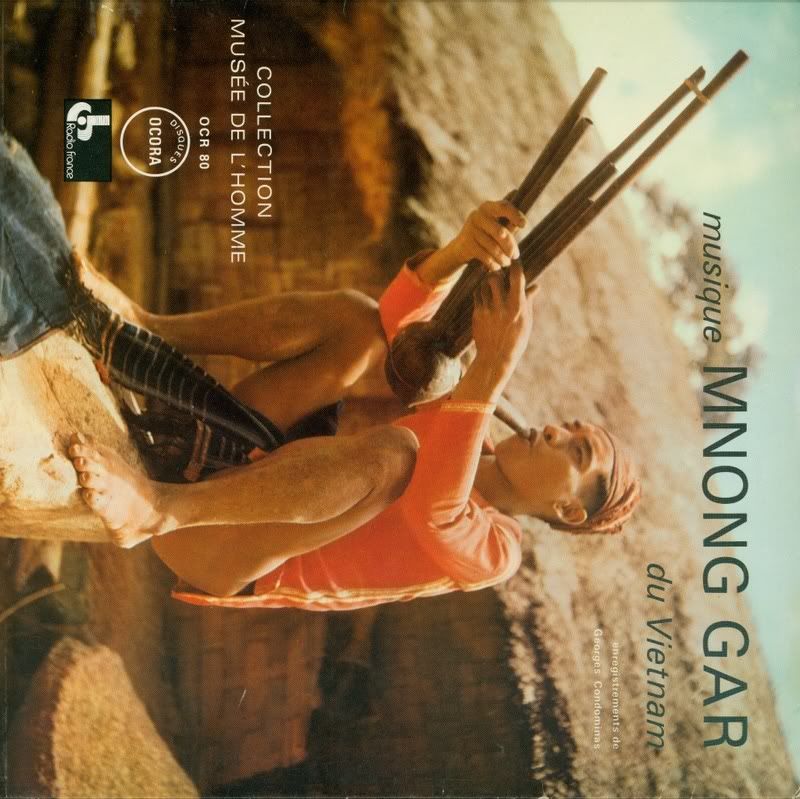
Musique Mnong Gar Du Vietnam: Anthologie Du Musique Proto-Indochinoise Vol. 1

from discogs: "Most of the items presented here were recorded in 1958 amongst the Mnong Gar (or Phii Brêe) of Central Vietnam, in the villages of Sar Luk, Ndut Trêe Pül and Nyôong Hat (field-trip of the Ecole Française d'Extrême-Orient and the Office de la Recherche Scientifique et Technique Outre-Mer)."

The Maa' music was collected during the same field-trip at the Daa' Rngaa plantation near Blao (Vietnam). The Mnong Buu Nör material was recorded in Cambodia in 1966, field-trip of the C.N.R.S. and the Centre de Documentation et de Recherches sur l'Asie du Sud-Est et le monde Insulindien, CeDRASEMI, L.A. 183, Associate Laboratory of the Ecole Pratique des Hautes Etudes (6th section) and the Centre National de la Recherche Scientifique.

mediafire A mediafire B


The music presented on this CD by Professor Tràn Van Khê comes from the South of Vietnam. The original Vietnamese name for this music is "don tai lu," which means music of the amateurs, although it is not at all an amateur music. This music, performed by small ensembles for small audiences, is for the entertainment of music lovers, outside of ceremonies or particular events or circumstances, and is part of what in Vietnam is called entertainment music, in distinction from other styles that are not. Although similar to Huê music, the court music of Central Vietnam, the music from the South differs in its modes, performance style, rhythms, improvisation style, and even its notation. The instruments used are typical Vietnamese instruments, mostly stringed instruments, including zither (dàn tranh), lutes (dàn tam, dàn ty bà, dàn xên), or fiddles (dàn cô, dàn gao), as well as some percussion. In this century, the Western violin joins the ensemble. Vietnamese charm at his best!(AMG)

mediafire

2009/08/10

Ocora East Asia 1

i know i have been a terrible blogger. not to mention stupid: lost a lot of links a few weeks ago when the rapidshare account ran out, and i didn't know about the "transfer links to collectors account" thing. (grrrrrr...) so there are a few requests to get to... going to get to them one at a time. (the 2 most recent OCORA Africa ones, "Bruitset Ambiances" have fresh links)

and now, onward and foward!

____Chen Zhong is one of China's most revered musicians and teachers. Seventy-five when this recording was made, he has spent a lifetime playing several instruments and keeping the Shanghai style alive. This is music for two, three, or four play and Zhong is accompanied by two Chinese musicians and the French Sino-musicologist Francois Picard. In various combinations they play flutes, ocarina, fiddles, and zithers. The ocarina in question is not the Western ocarina of course, but a round clay flute with a 7000-year history; reviving its use in secular music is one of Zhong's many achievements. Zhong plays solo pipa (lute) on one track and exhibits some impressive fingerpicking. On another, Zhong plays end-blown flute (something like a recorder) and is accompanied by Yang Lining on the zheng zither, which in this piece is strummed gorgeously in the manner of a harp.

Teruhisa Fukuda performing six of the most representative pieces of the Kinko School, developed in the 18th century from traditions of itinerant komusô zen monks for whom enlightenment could be reached through the sound of the shakuhachi flute.
2012/12/03

OCORA New and Re-posts

i promised to upload the entire Ocora catalog of 500+ recordings at one point, and i am a man of my word.  so it continues here.  check back for more.

2010/06/29

OCORA Africa continued

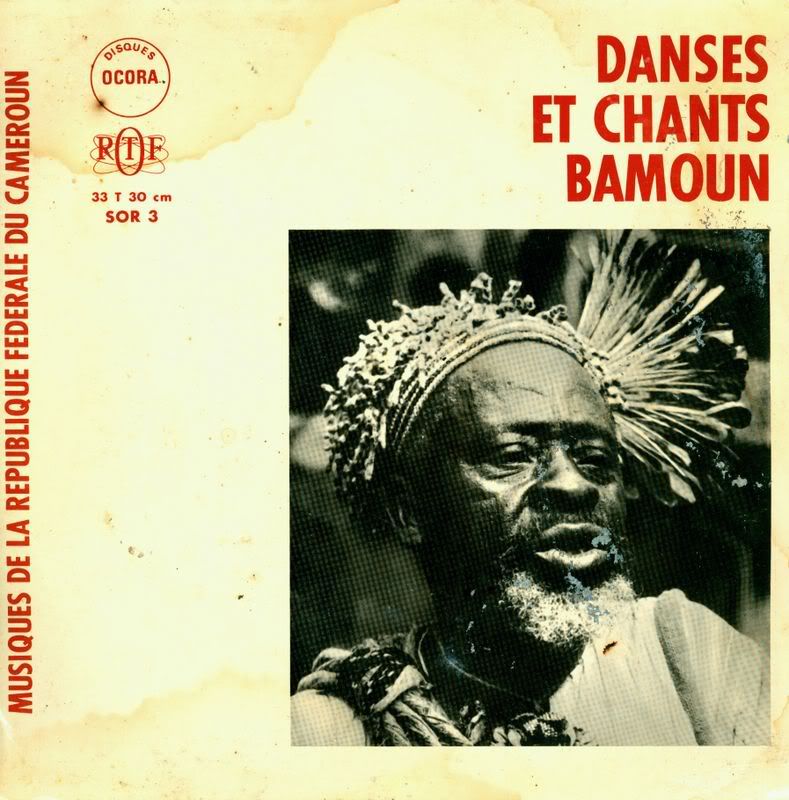
Cameroun - Danses et Chants Bamoun: a very rare testimony of the traditional court music of Bamoun, warriors and landfarmers, and their life overseen by the Royal Family (Mbobo Sultan Seidou...), recorded by Michel Houdry in July 27th, 1957 at Foumban Palace.
for me the musical treats on this old school Ocora record, never released on CD, start at track 3, where the grooves begin. (pseudo theory alert:) seems to me in a lot of traditional african music, Melody and Rhythm seem to have never been torn apart by divisive, compartmentalizing, and overly analytical minds, and remain, inseparably, perfectly, one (much like the modern Shangaan music in the previous post). some tracks suffer from out dated recording technology, and sound a bit muddy. this vinyl rip comes from the one they call Op.

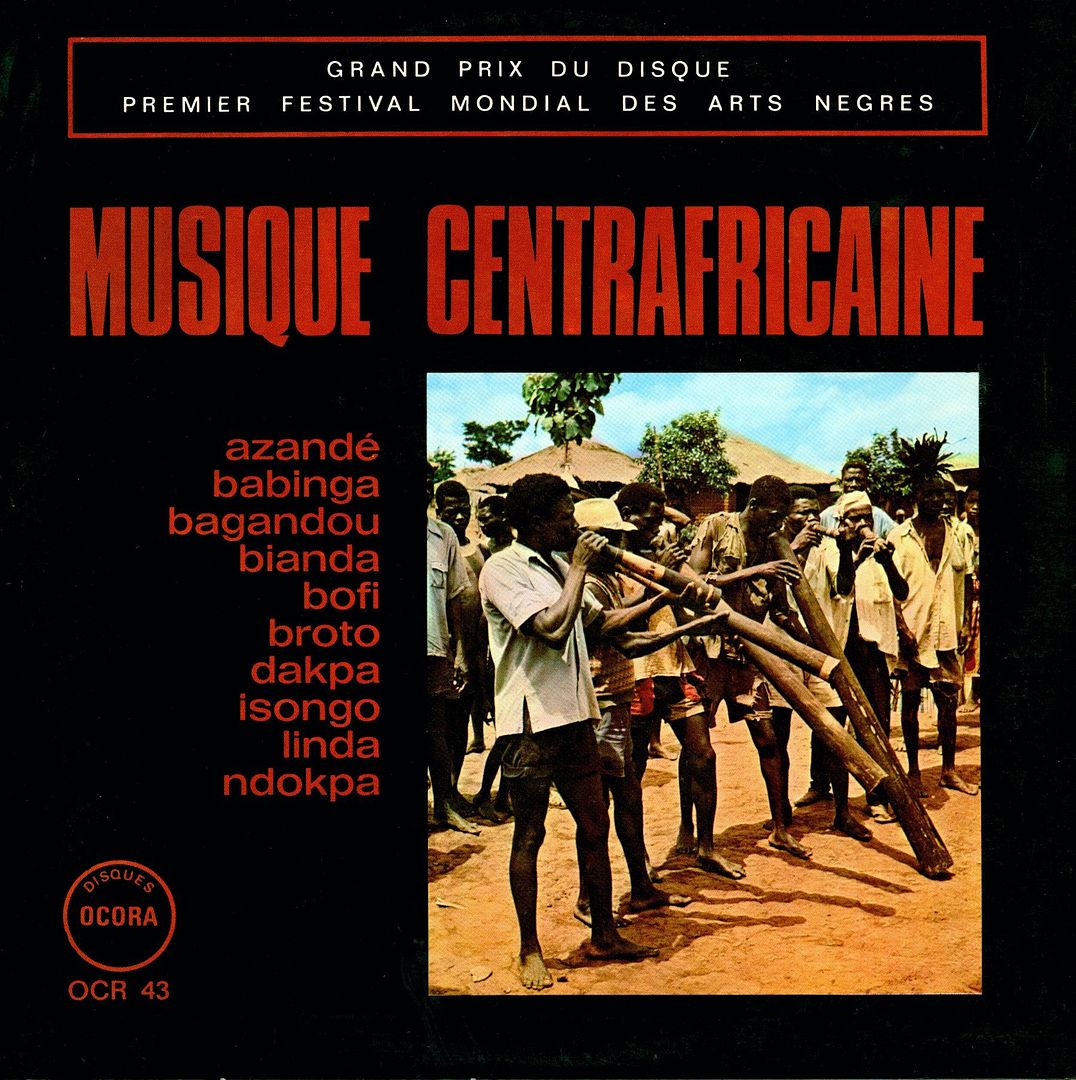
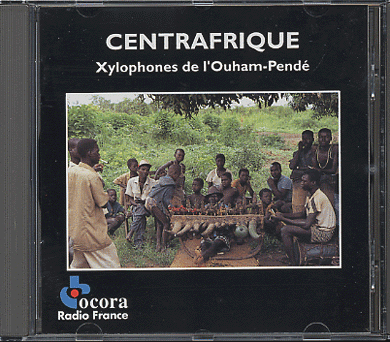
Centrafrique - Xylophones de l'Ouham-Pende:
"In Central African societies musical instruments have various functions linked to different musical repertories. First and foremost, instruments are used in ritual and initiation ceremonies, notably in connection with a heightened state of consciousness. The beating of musical instruments in particular, along with song, arouses that heightened state, which manifests itself in trance, auditory drive and/or music-colour synesthesia, allowing communication with the supernatural (often under the psychotropic influence of hallucinogens). Then there are such separate functions as sending messages from village to village by a slit-drum and providing entertainment for a group or an individual. The diversity of the functions of musical instruments is not, however, limited to these main contexts.

The instrument types found in Hornbostel and Sachs's classification of 1913–14 – idiophones, membranophones, chordophones and aerophones – are represented in Central African music. Notable among the wide distribution of instruments are the different kinds of xylophones, i.e. mentsiang of the Mpyemo (fig.3), kponingbo of the Zande (fig.4), zanga of the Pana and the Gbaya-Manza-Ngbaka, kalanga of the Banda-Mbiyi and kangba of the Manza, or the various forms of double-headed drums, i.e. ntumo of the Mpyemo, ndumo of the ‘pygmies’, kporo of the Banda Gbambiya, bio of the Gbaya and guru of the Zande."

in some ways a more straight forward enjoyable listen than the above, the pling-plong xylophones weave beautifully intricate rhythmelodies.

Centrafrique Anthologies de La Musique Des Pygmees Aka: 2 CDs of field recordings of the Aka Pygmies, originally issued on LP in 1978, are presented here (sorry the tracks from 2 discs are mixed in one folder)

"Music is part of daily life for the pygmies, as that's well illustrated here; every activity comes with singing, sometimes accompanied by varying forms of percussion, and some spare instrumentation, like the mo-beke, a kind of whistle, that features of "Nzombi." There are songs and music for activities, some with more sacred values, like "Mokondi," which is sung to dedicate a new camp. And there are song tales, songs of mourning, and for divination. There's some fascinating insight here, as well as some astonishing music. However, it's likely to be of interest to ethnomusicologists more than the general public, which is a shame, since there are beautiful melodies to be heard (great recording quality, too). ~ Chris Nickson, All Music Guide

The Aka are one of the three groups of Pygmies found in Central Africa today. They are monogamous and settle in small family encampments that comprise parents, children, sons, and daughters-in-law and offspring, groups of thirty to forty persons organized in democratic communities. Pygmy music, in the image of all their social activities, presents very similar characteristics, that is to say, relative autonomy of each participant within implied but strict structures. The recordings of this anthology, the first to be devoted to a single African people, offer in addition the distinctiveness of having been made in a single encampment, that of the old hunter Mbonzo, a group barely larger than forty persons. Music plays a central role among the Pygmies, there is no day without music."

Central Africa. Aka Pygmies - Hunting, Love and Mockery Songs: another beautiful collection of the delicate and dreamlike songs of pygmies. on this one more accompanied by plucked string instruments than the marimba type sounds of the previous one. layered polyphonic voices glide over simple rhythm patterns, gentle, lovely and mesmerizing... i hope it gives you both enjoyment and inspiration.

2007/04/04

Chidambaram-bangbang-boom-chk-boom

this was posted many months ago on SFRP's Ocora label thread, and has been knocking the life out of my speakers ever since. huge props to asterisk for having this absolute diamond in his collection.

the hottest rhythms I've ever heard. period. time signatures moving around like liquid, drums being hit with a true fierceness and precision. given flight by three (I think) master reed players. I don't know much (or anything) about the rituals being performed here, except that I hope they are still going on, loud as ever.

Inde du Sud: Temple de Chidambaram, Periya Melam


"Recordings from 2000-1 and affiliated to the temple of
Chidambaram (dedicated to Shiva but also to Vishnu), the ritual music
ensemble Periya Mêlam sounds vibrant and penetrating with its
nagasvaram oboes, tavil drums and talam castanets, the voice of the
gods."

http://www.megaupload.com/?d=LXJSQWK4

bb

2008/05/05

pieces from Al Sur 1

periodically i will be posting selections from the wonderful catalog of the now defunct Al Sur ("the wall" in Arabic) label, made available by the ever so generous and honorable Ambrose Bierce.

a fun and catchy album of soulful dance and pop tunes which welds together many styles: "Anefas Trankil, a.k.a. Akli D. was born to a musical family in Kabylia. Since leaving Algeria, he has lived in France and California, and Anefas Trankil, recorded in Paris, is his first complete album. The album has fascinating variety, from the pretty, banjo-driven "Taqb-Aylit (Kabylia)" to the rich polyrhythms of "A Tayri (Love)." One strong pop song, "Azul (Greetings to you)" has an interesting Afro-Celtic folk aspect to it, perhaps reflecting Akli's work with Celtic musicians in the United States. The words say, "Hey, mountains of Africa. Send us back the echo of a free people, the ones known as Tuareg." "Akka I D-Us (Look there)" is a beautiful, lightly funky song emphasizing the fast 12/8 rhythm common in much traditional Berber music. The notes (in French and English) and artwork are good. In the tradition of Matoub Lounes, Akli D. focuses poignantly on the plight of his people struggling for rights and recognition in Algeria."

Akli D. - Anefal Trankil

Akli Dehlis - vocals, 12-string guitar
Abdenour Mohamed - mandolin, banjo
Malek Hadjiat - e-guitar
Rachid Mammar - derbouka, bendir, karkabou, tambourin
Abdenour Djemai - guitar, banjo
Zahir Djemai - vocals, mandolin
Pierre Beaucamps Ebongue - bass
Hervé Le Bouche - drums
Jef Sicard - Clari-Ney
Sylvie Aioune - vocals
Aline Hurault - vocals
Enriqué José - guitar

download

stately Persian classical music from Iran. google translated from French: "Eminence recognized the music Iranian Dariush TALA'I, which runs through the stages of the world for over 25 years, was the first to discover the Western public that these Persian lutes are târ (six-stringed lute) and setâr (three-stringed lute). ... After several discs, especially among Ocora, TALA'I began an Integral of the Persian music, including 5 volumes have been published in Al Sur. Meanwhile, Al Sur invites us to listen to the Lord in a context that particularly likes the scene, accompanied by a young prodigy percussion Iranian KHALADJ Madjid, who has already done for Al On a percussion solo album and another with the ney flute player Hossein OUMOUNI.

To my knowledge, no disk had recorded the meeting TALA'I and KHALADJ. This is now done with this recording of a 1996 concert in Utrecht. Through 14 themes chained, Dariush TALA'I explore, exclusively târ, different aspects of Persian music, a discipline with a precision that does not prevent the inventiveness and experimentation discreet. The rhythmic support of the tombak (or zarb, a term probably more widespread) Madjid KHALADJ revival, with a high degree of refinement, the connection of melodic târ, which gives us a great moment of poetry modal for the greatest satisfaction ears demanding and knowledgeable." -- Stéphane Fougère

Dariush Tala'i & Madjid Khaladj - En concert à Utrecht le 30 Août 1996

Dariush Tala'i - tar
Madjid Khaladj - tombak

download

for all you bad, bad people out there (you know who you are), another gorgeous recording of Liturgical Chant from the first ever Christian state of Armenia. again google translates from French: "Akn aims to revive and develop the traditional interpretation of Armenian liturgical chant. The performances reflect the work developed under the direction of Aram Kerovpyan since 1990, which led to the creation of the Centre for the Study of Armenian liturgical chant, founded in January 1998 in Paris. ... traditional songs of the Armenian liturgy, including sharagan (hymns, tropes), form the body's largest directory. The psalmodie récitative and mélismatique, song of the Book of hours and optional melismatic singing, singing group or solo, are also part of the programmes submitted. Akn interprets this directory monophonic and modal in its original form. The drone is an integral part. Akn is a mixed choir, composed of 14 to 16 participants." -- http://akn-chant.org/fr
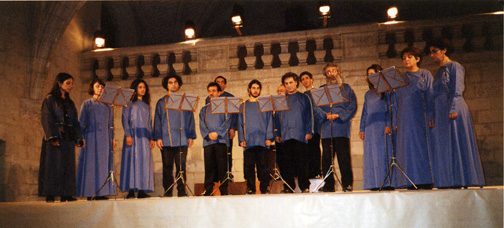
Akn - Chants liturgiques arméniens


download

2008/03/10

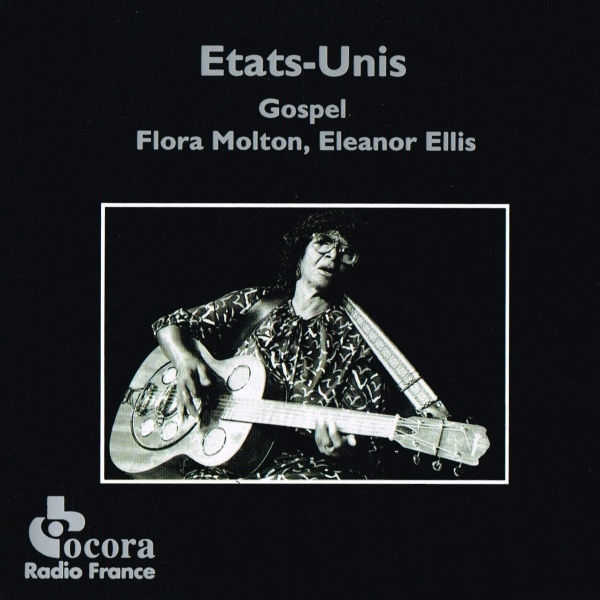
Flora Molton, Eleanor Ellis

heavy "blues gone to church" rootsy gospel. next to zero information on the web about this singer and her timeless music, some of the most heart felt and beautiful in the cannon. i think this is the only disc representing American music in the entire Ocora catalog -- and have to say probably as good a choice as is possible: stark and minimal. so true. so real.
from Spinning in the comments:

"Flora Molton used to play outside of the old Woodward & Lothrop department store in downtown D.C. - I remember stumbling out of the Metro exit and hearing her voice. it was a bitter cold day in December, shortly before Christmas. I think she was seated on a metal folding chair (the kind used at card tables), but am not sure if I'm remembering that correctly... You can read more about her here.

She had a cardboard sign of some kind, too... for donations, maybe?

A few years after I first heard her, I ended up working a few blocks down the street from Woodies. There was an elderly blind man who stood on the street corner day in and day out, singing a wordless moan - he and Flora were the last real street singers in D.C.

I don't know this man's name, and wish i had more appreciation for his singing, which was monotonous (he never varied the tune), wordless, high, keening, and ear-piercing. It was very difficult to block out the sound of his voice, especially when our office windows were open.

I am sure he's long since gone."

it don't get more real than that do it? a living national treasure. singing on the street with a cardboard sign for donations.

rapid one and rapid two

2009/09/02

Ocora: Africa part 3

hot off the heels of the Namibian Kwaito here's some more traditional Namibian sounds - from the most anthropologically studied pre-modern and pre-tribal people of all time: the Dobe Ju/'hoansi. i wrote a bit about their fascinating and indeed in many fundamental ways far superior lifestyle (relative to ours) here (will re-up the lecture very soon).

about the same latitude to the east, here is another great recording from Madagascar.

and finally, some more of that exquisite Kora music, from Gambia this time (instead of Mali).

2008/05/17

OCORA: India part 2

an entirely Northern edition, we shall dip into the Karnatic south later. the Sangeet Trio is lovely as can be... and I really love the 2 Gopal Krishan albums here: his sound is very special for me... wicked.


Sangeet Trio :
Vishwa Mohan Bhatt, guitar
Tarun Bhattacharya, santur
Renu Mojumdar, bansuri)
recorded Dec. 16, 1995, Théâtre de la Ville, Paris

"This is an unusual ensemble for Indian classical music. First of all, instead of a soloist accompanied by the tabla drums and the sitar-like tampura, there is a trio plus accompanists. The trio consists of three unusual instruments: bansuri flutes (played by Renu Mojumdar), a modified guitar (played by Vishwa Mohan Bhatt), and the Middle Eastern santur hammer dulcimer (played by Tarun Bhattacharya). The guitar is especially interesting. It has a short neck, four melody strings, three drone strings, and 12 sympathetic strings. It is played with a metal slide in a quasi "slack key" style. The slide is frequently used to bend notes in the Indian fashion, but when Bhatt resorts to more of a finger-picking style, it sounds American. The trio plays "Raja Jog" at this live concert in Paris. It is an exceedingly long raag (66 minutes), and the alap -- the opening 18-and-a-half-minute slow movement -- might be a little tedious for Western ears. The two faster sections are more engrossing. The musicians chose a raag whose intervals recall the American blues, and there is a repeated five-note figure that could almost be a jazz riff. The overall effect is more like jazz than blues. These allusions are achieved without any straining for effect, if they are indeed conscious at all. Good fun.(AMG)"

Inde du Nord: Sangeet Trio en Concert


"The vichitra veena is a slide instrument used in North Indian classical music, but it has become quite rare today. Gopal Krishan is one of only a handful of players with recordings available. I have heard them all, and I've heard all of GK's available CDs, and I believe the raga JOG on this double album is his best effort on record.

As you may or may not know, JOG is similar to the American blues scale - it uses both forms (flat/natural) of the 3rd note, and the flat is a pretty high flat, just like in the blues. It's a nice effect to hear something so like a slide guitar play something so like the blues - so like, and yet so unlike ...

G.K. is very fond of LAYAKARI, playing around with the rhythm, and he does it a lot here in JOG. Tabla player is Latif Ahmed Khan of Dehli gharana, student of ustad Gami Khan, and he has played good solid Dehli style. Tabla sound is good, not the least tinny. He has not played any Zakir Hussain fireworks, just good accompaniment with communication and togetherness with GK in layakari parts. You will be hearing them both make small mouth noises on various "SAM" points; this recording comes very much alive. Interestingly, ALAP is comparatively speaking pretty fast and GAT is comparatively slow tempo, though ending with some JHALLA.

(Gopal Krishan by the way learnt from his father, called Nand Kishor, later with Gwalior gharana teacher Khubchand Bramchari - his rival on the vichitra veena Dr Mustafa Raza plays Gwalior style - and finally went to Ravi Shankar. So the style he plays here reminds of Ravishankar more then Gwalior, hence the layakari. He plays I think a total of 4-6 slightly out-of-tune notes in JOG - he's human! he's human! (Amazon Reviewer)"

India: Gopal Krishan - Inde du Nord, L'Art de la Vichitra Vîna
DISC 1 DISC 2-A DISC 2-B


Gopal Krisnan - Dhrupad et Khyal
PART-A PART-B


Inde du Nord - Raga Bhairav – Sarod - Partho Sarothy: PART A PART B

2008/05/28

NEWS and IMPROVISATIONS

At the Konfrontationen festival in Austria last year i struck up a completely random conversation with someone standing next to me before a performance, and he turned out to be a regular visitor of this blog - always a great pleasure to meet internet music heads in real life. So if you are going to the FUSION FESTIVAL this summer, be sure to say hello, we will be playing on 2 separate nights:
SAT JUN 28 / 9PM - 12PM ---- DJ ZHAO solo
SUN JUN 29 / 1AM - 8AM ----- NGOMA Afro-Asia Soundsystem

Also NGOMA Mix Series VOL. 2 will be out soon!!!
..........................................................................................
Now, before we return to the Ocora diet, a nice bowl of improvised recordings to sate your appetites for contemplative and quiet sounds... sounds soothing me right now as i blog after returning home at 7AM from djing all night to a club full of people jumping up and down on a tuesday (i heart Berlin):

3 guitars, 1 bass, and some electronics, this quartet stretches out over 50 minutes of not only the scrapes and thuds of extended technique, but also the beautiful plucked tones.

Werner Dafeldecker: electric bass, double bass
Martin Siewert: acoustic guitar, electric guitar, electronics
Burkhard Stangl: acoustic guitar, electric guitar
Taku Sugimoto: electric guitar, 6-string bass guitar

Recorded at Wuschi's Basement (live) and Feedback Studio in Vienna, April 2000, and Tonstudio Amann in Vienna, October 2000. Released May 2002

SSSD - Home

this one on the whole, besides being varied with an all star contributor list, belongs to the more difficult, stringent, and kurmudgeony school of improvisation. not my favorite but still a very interesting and sometimes very good listen.

1. Scott Fields (electric guitar), and Yoshiko Kanda (percussion)
2. Utah Kawasaki (analog synthesizer), and Yuko Nexus6 (cassette player)
3. Gene Coleman (bass clarinet), Richard Teitelbaum (electronics, laptop computer), Brett Larner (koto), Ko Ishikawa (sho), and Aya Motohashi (hichiriki)
4. I.S.O.: Yoshimitsu Ichiraku (amplified percussion), Sachiko M (sampler with sine wave), and Yoshihide Otomo (electric guitar, turntable); and Kang Tae Hwan (alto sax)
5. Stefan Keune (sopranino sax), John Russell (acoustic guitar), Brett Larner (bass koto), and Masahiko Okura (alto sax)
6.Toshihiro Makihara (percussion), Brett Larner (gu zheng), Utah Kawasaki (analog synthesizer), Ami Yoshida (voice), Yuko Nexus6 (sampler), and Taku Sugimoto (6-string bass guitar)
7.Carl Stone (laptop computer)
8. Kazuo Imai (electri guitar, electronics), and Elliot Sharp (electric guitar, electronics, sax)

All recorded live at Deluxe in Azabujuban, Tokyo. Released July, 2001

Deluxe Improvisation Vol. 2 PART A PART B

a re-up of this collaboration between our buddy Otomo and some Korean friends of his:

Otomo Yoshihide, Park Je Chun, Mi Yeon - Loose Community


as per requested, a re-up of the classic I.S.O - I.S.O. (live in a zen garden)

and another re-up:
Taku Sugimoto & Kevin Drumm - Den

2008/06/10

OCORA: India part 3

just a couple today, still from the north. those looking forward to the southern vocal music hold tight, we gon get to the karnatic song cycles soon enough.

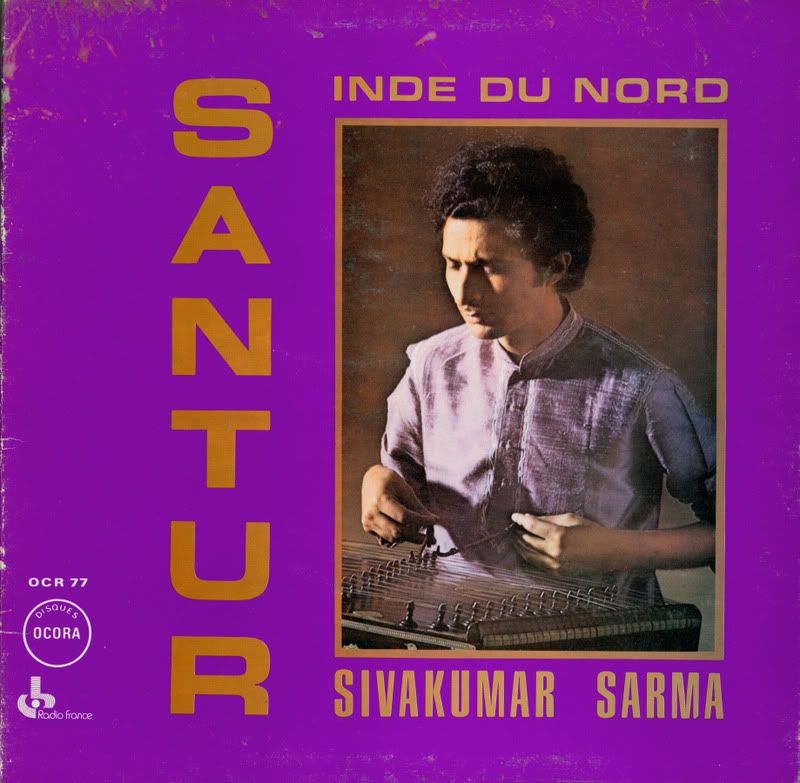
Inde du Nord Shivkumar Sharma - Santur
the master and his instrument with tabla. what is there to say? (original vinyl rip by Op)

PART A PART B

thanks to jed for these Zshare mirrors: part A part B

and a heart breaking violin recording: Satya Dev Pawar

and jed's Zshare mirror

2008/06/14

OCORA: India part 4 - Dirty South


South India: Pandam, Tanjore Style of Singing (Inde Du Sud: Padam, le Chant de Tanjore) - Aruna Sairam

originally posted by Op. Two reviews from Amazonworld:

*****Austere beauty, a great singer, September 18, 2000
Reviewer: ST (pensacola, fl USA)
As a total fan of M.S. Subbulakhsmi for over 30 years, it is a joy to find a near 'rival', this artist from Tanjore and this form, Padam. It's a style of singing she represents wonderfully, a form that we're told is fast disappearing. Her presentation is languid, leisurely, dignified and charged with the deepest feeling. A special surprise and gem is her rendering of a Sloka in raga Hamsanadi which is counterpart to raag Marwa in the Hindustani system.

*****Tanjore style, September 30, 2003
Reviewer: A music fan
Following up on the previous review, more than a "rival," the Tanjore school is a genre of the many schools (others being Karaikudi, etc.) and Aruna Sairam is a protege of this school through her association with the heiress of the great Veena Dhannammal, the late Sangeetha Kalanidhi Smt. T. Brinda (1912-1996). T Brinda along with her sister T Muktha are reputed to be repositories of many padams and javalis, some rarely heard today in concerts.

Listeners can treat this album as an exposure to the Tanjore style, with particular emphasis on rendering of padams, which are difficult pieces of the Karnatic repertoire to learn and perform. In this album, Aruna has rendered 3 of Kshetrayya's padams as well as one of Govindaswamy's. And not precluding the trinity of Karnatic Music, she includes a kriti of Tyagaraja in the Vivadi raga (raga with dissonant notes) Vagadhishvari. And what a thoughtful way to conclude her tribute to her masters with a Sanskrit sloka from the Krishna Karnamrutham of Bilwamangala Lilasuka in a garland of ragas!

PART A / PART B

and from jed Zshare mirrors: part A part B


Thayambaka, a complex, sacred art of percussion-playing from the temples of South India, performed to drive away demons.

Inde du Sud - Kerala, Le Thayambaka


India: Une Anthologie de la Musique Classique de l'Inde du Sud
Compiled by L. Subramaniam. originally posted by Goldfinger.

The best general primer for the vocal and instrumental music of South India. Compiled by Dr. L. Subramaniam, this four-volume set has excellent booklet notes explaining the wonders of Carnatic music and boasts contributions from many of the genre's greatest exponents illustrating vocal genres or instrumental techniques or instruments. Contributing vocalists include M.S. Subbulakshmi, Trivandrum R.S. Mani, Alathur SrinivasaIyer and T. Mukti. All the major instruments traditionally found in Carnatic music are illustrated -- among others, violin (L. Subramaniam, V.V. Subrahmanyam -- Subramaniam in the text), vina (Raajeshwari Padmanabhan), gottuvadyam (N. Ravikiran), flute (T.R. Mahalingam), morsing or Jew's harp (T.H. Subashchandran), kanjira, that is, a type of small drum (V. Nagarajan), ghatam or clay pot drum (T.H. Vinayakram), jalatarangam or tuned liquid-filled porcelain cups (Seeta Doraiswamy) and clarionet or clarinet (A.K.C. Natarajan). An anthology of great vision, essential for any general appreciation of Carnatic music. (AMG)

VOL. 1
VOL. 2
VOL. 3 A VOL. 3 B
VOL. 4


BOOYA! :D

2006/06/27

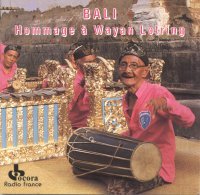
Gamelan - Bali - Hommage a Wayan Lotring [NEW LINKS]

posted some Java/Sumatra earlier, here is a proper Balinese double disc. extremely abbreviated version of extensive liner notes from Ocora plus some of my own musings and limited knowledge:
Wayan Lotring, a common household name in Bali and other parts of Indonesia, was a master musician, band leader, and instrument designer responsible for a 1920s revision of court gamelan which became the dominant 20th century sound of Bali. how many times the ancient instrument and art form has been revised in the 10,000+ years of its existence I'm not certain of, but I think the last major wave of adaptations occured roughly 500 years ago, when the tuning was somewhat changed and refined into what we know as modern gamelan. Wayon Lotring also re-worked and modified numerous pieces of traditional music for 20th century audiences, creating a powerful and monumental yet subtle and agile style full of nuance and intricate detail, before passing away in the mid 1980s.

Disc 1 Disc 2

2006/06/25

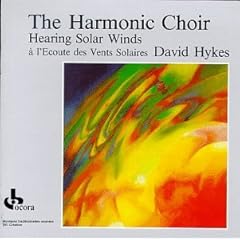
David Hykes & the Harmonic Choir - Hearing Solar Winds [WORKING LINK]

from what I understand, David Hyke's vocal work is based on ideas and techniques derived from Tibetan and Tuvian throat singing traditions, yet streamlined and refined according to an european choral aesthetic - the result somewhat akin to an Eastern gregorian chant... or if Arvo Part converted to Buddhism.

recorded in an old church, the resonant psychoactive overtones slowly build from the layering of voices; hair-raising and chillingly powerful in its majestic stillness - this is deeply transporting and transcendent stuff - music for mystical journeys and out of body experiences.

regrettably, like so many others, his later work succumbed to the garish tackiness of new-age music, but this earlier recording, regarded by many to be his masterpiece, is nothing of the sort - uncompromising and rigorous in its mystical search for a perfect sound - the Ocora label would not let us down.

I recommend late night or dawn as optimum times for this record; or meditating for a while in silence before listening.

http://rapidshare.com/files/19860706/THCDHHSWall.zip

(note: this is not out of print but it does cost $20.00 and somehow I get the feeling that money is the last thing on their minds when David Hykes and his choir made this music...)

2006/06/15

The Masters of Gospel [NEW LINK]

I've always said to my friends that this disc is the best $2.99 I ever spent. but little did I realise what exactly that meant until yesterday I decided to look it up on amazon, and saw a single used copy for sale at $999.00 (now it's unavailable because I guess someone bought it. hmmmm... wonder if I should sell my copy?)

a radio dj in LA I know gave me the initial heads-up on the out-of-the-way and entirely unhip little discount store in Los Feliz called East Side Records (closed down about 6 mnths ago). and over the course of the next year or 2 i had taken the habit of stopping by when I was in the area because they had an always amazingly stocked world-music section full of Ocora and Auvidis titles - which the regular patrons, people in their 40s or 50s who would look at home sitting all night in some shady dive-bar, entirely ignored in favor of the pop section or the cheap DVD movies. on one of the rare days that i was poking around the country section, which was as neglected as the world-music, i saw this disc. knowing nothing about gospel music at the time, brought it to the quiet, lanky man who owned the shop. he looked at the names on the back and immediately said "oh yeah. this is the real thing. Chicago Sanctified Singers, Thomas Dorsey, Rev. Gary Davis. yup, you can't go wrong with this".

and from the first 10 seconds of the first tune i realised that the man was right - just the sweetest aching, soul stirring music ever. voices that soared straight up to heaven or just relaxing on the corner, instruments that did what they were there to do without any over-embellishment... the selection is pretty much all 1930s Chicago, and the quality and quantity is rare on any compilation of any genre. many, many highlights on here but one of them is this jacked-up, hand-clapping monster of a tune about Judgement Day, and the first time I heard it I said "God almighty House Music really DID come from Chicago!!!"

1930s gospel roots of House? wha? - just bump track 7 and crank that shit up - you'll see what I mean :)

rapidshare