Incubate Festival (formerly known as ZXZW, blog here) in Tilburg, Netherlands is coming up in September. on the 19th, as part of Generation Bass, i will do a solo set of all new material, heavy on the South East Asian and Middle Eastern flavors -- all the more abstract, emotional and "difficult" pieces which are too challenging and not suited for normal dance floors will get a chance to shine. on the 20th, as part of Car Free Sunday, i will be supporting dj for the legendary Orchestre Poly-Rythmo de Cotonou (whose music you know from the Psychedelic Sound of West Africa (will re-up) and African Scream Contest compilations) -- expect appropriate Afro Funk both old and new.
the lineup looks fantastic, of particular interest to readers of this blog might be: James Blackshaw, Mark Ernestus (Rhythm & Sound) & Tikiman, Shackleton, Cooly G, Sensational and Spectre the Ill Saint from Word Sound -- and probably 2 dozens more i am not familiar with -- i hope to see some of you there. thanks to Vince the Prince for making this possible, check his great and often updated Generation Bass Blog for some of the coolest boom boom around the world.
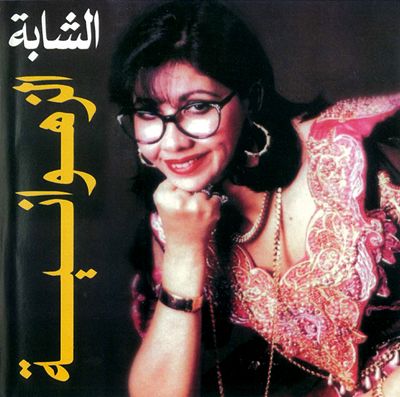
once again our western aesthetic prejudices might make the casual CD browser on the streets of Marrekesh pass by this awe inspiring recording. the photo of this woman might look like a 2nd grade teacher to us (not that 2nd grade teachers are necessarily anything to be taken lightly), but her voice, both sensuous and earth shaking, rivals those of the greatest Rai singers ever. make no mistake: this is some of the most powerful and beautiful Rai music i have ever heard, with enough depth of emotion and epic force to move mountains. (anyone know the english version of her name?)
thanks to Abdullah and Yves Thibord, i now know that this is Cheb Zahouania, whose name:
(from Yves) "could be tranlated "Happy-go-lucky", a star of algerian rai since the mid 80', and still today. Her "scandalous" duo with Cheb Hasni "we make love in a Shabby Shack" started their careers, Hasni was murdered by the islamists in 94. He is still a big star in Algeria...
Maghni is credited , this guy was the keybord player for a lot of recording in Oran (Algeria), Boualem (her husband) is the editor of the "label" DiscoMaghreb, meaning this cassette was probably recorded at the end of the 80's (in one night) the tracks are some of her best known tunes. you must have an moroccan edition printed in arabic caracter, the algerian original was printed in latin caracters. one thing is that the singers were recording many versions of the same tune, Zahouania must have recorded many hundreds of cassettes... A Cd version of this cassette has probably been released since (it is what i bought and presented here - zhao)."
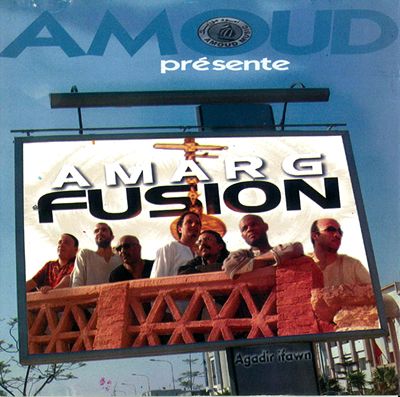
and here is that Berber Reggae i was talking about. to me the elements of this hybrid music are reminiscent of Mongolian, Russian, Celtic, as well as North African and Jamaican traditions which stretch back across the centuries.
since they are a contemporary group, i was not going to share this (or at least not in its entirety), but after a search i could find no place to purchase the CD or digital files. if anyone finds such a place please let me know and i will link to it, and remove the download.
oh, and to the racist asshole who left a message in the last Morrocco post, don't bother trying to broadcast your ignorance and stupidity, it's not worth anyone's time.
big thanks to Arlei for the excellent camera work, Carolin for making connections, Nuwella, Jessica and Maya, for their support and just being amazing.
time was 1 - 3:30 PM. most people were just waking up i think (but some already on what looks like some good drugs :) due to the time of day and mood, Congo played pretty straight and sunny (maybe a bit overcast), and did not get into his crazy effects boxes too much... we need to record an evil-dead apocalypse dub night time set soon. and Robbie usually plays with at the very least 3 kongas, preferring to have a dozen or more drums in front of him, where his hands just become a blur... but at this they only had 2 kongas for him.
we look forward to playing many more shows and also recording (if you know some promoters or festival organizers in your city please don't hesitate to send this to them!)
(before we begin, a few re-ups: the gorgeous bird symphony, Kaija Saariaho's "L'Aile Du Songe", as well as the 2 for solo post which contains Feldman's "For Bunita Marcus" and Scelsi's "Complete Clarinet".)
the following is my favorite installment in the Avant Garde Project - 4 pieces of music by Robert Erickson. words in the original article:
"The composer of all four tracks, Robert Erickson, was born in 1917 and was a founding member of the Music Department at University of California San Diego, starting in 1966. He wrote a number of books, including Sound Structures in Music (1975).
Night Music is the standout piece in this set, and is one of the most beautiful pieces of music I’ve ever heard (same here - zhao). It is based around the agile, sinuous trumpet playing of David Burkhart, supported by flute, clarinets, trombone, cello, bass, and percussion. If the first two AGP installments have been too chaotic for your taste, check out this lovely meditative fantasy. It starts off quite softly for the first few minute--no adjustment to your equipment is necessary.
The other three tracks fill out the remaining Erickson pieces I was able to find in my stacks (minus Pacific Sirens, which is currently in print). The Idea of Order at Key West features the soprano Carol Plantamura singing Wallace Stevens’ poem, backed by flute, clarinet, Burkhart’s trumpet, viola, and cello. It includes some nice harmonies and ensemble scoring. General Speech is an interesting novelty piece in which Stuart Dempster plays trombone while forming his mouth around the words of General MacArthur's retirement speech at West Point. The timbres that result are intriguing, and one can even somewhat follow what is being said. End of the Mime is a choral piece to a text from Finnegan’s Wake.
These tracks were drawn from CRI releases SD 325 and SD 494, and New World Records NW 254. The text file has liner notes from all three LPs, including biographical material on Robert Erickson and the lead musicians as well as commentary on the pieces. "
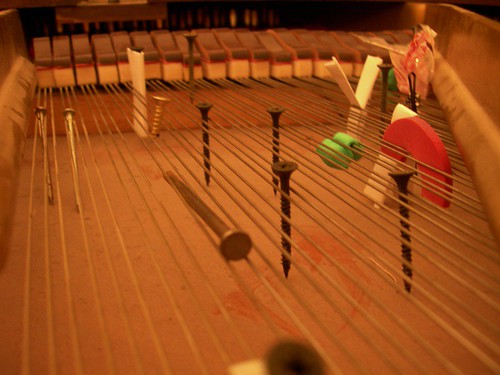
for those unfamiliar with this classic set of music: ideas from Gamelan and African xylophones meets Satie-esque minimalism, realized on carefully messed up pianos performed by the one and only John Tilbury.
and finally when you are ready for some serious meditative depth. a performance of Cello music by La Monte Young. of course it takes some patience, as the first section is a single tone which does not change much, if at all. but it does pay off, as ever so slowly other layers of ebb and flow gently swell in the composition...
take a break from filling out your TPS report and enjoy a piece or 2 of sweet Molam:
(better to view full screen or go to the youtube page as this blog cuts off 20 pixels from the right - i tried adjusting but it doesn't work)a friend (hi Danielle!) just pointed out that this is actually from Laos, and not Thailand as i previously thought. but i think the style can also be found along the border and in other parts of Thailand.
my Thai friend says this is the music people from the country side prefer, while the big city folk are all listening to Rihanna and Kanye.
i was thinking about why a style like Molam from Southeast Asia is unheard of in the west, while it is as funky and enchanting as anything, for instance Cumbia, the third-world darling of the hipster world at the moment. these sounds feel more strange to western ears, but why? for sure the reasons lie in history, trade, access, interaction between cultures, and a slew of economic and political factors.
for instance why has Reggae become by far the most internationally popular music from the Caribbean? and not the incredible grooves from the Dominican Republic, wicked VouDou sounds from Haiti, or of course, the amazingly rich musical traditions in Cuba? El Congo, my Cuban trumpet man, explained that this is due to trade agreements between Jamaica and US from early and mid 20th century, Cuban politics which isolated it from the world, and large scale migration of Jamaicans to the UK, etc., etc. in other words, arbitrary reasons little to do with the artistic merit of the music.
the above are more traditional examples, in Thailand there is an urban Molam sound system culture -- in poorer parts of town they would just set up a stage and speaker bins anywhere, and people come and dance all night:and this, my friends, is what the information age is all about: was ecstatic to encounter braingoreng, a treasure trove of South East Asian cassettes and vinyl. i'm still in the stage of frantically downloading, and have not yet reviewed the material, but there has to be some quality Molam hidden in the depths of this blog, along with all kinds of Gamelan, Muay Thai (Thai boxing) soundtracks, Afro-Arabic-South Asian hybrid pop (!!!), and who knows what else. the author writes of one recording: "... unfold like stratified mandalas" -- words that can likely describe the blog itself.
i know i have been a terrible blogger. not to mention stupid: lost a lot of links a few weeks ago when the rapidshare account ran out, and i didn't know about the "transfer links to collectors account" thing. (grrrrrr...) so there are a few requests to get to... going to get to them one at a time. (the 2 most recent OCORA Africa ones, "Bruitset Ambiances" have fresh links)
and now, onward and foward!
____Chen Zhong is one of China's most revered musicians and teachers. Seventy-five when this recording was made, he has spent a lifetime playing several instruments and keeping the Shanghai style alive. This is music for two, three, or four play and Zhong is accompanied by two Chinese musicians and the French Sino-musicologist Francois Picard. In various combinations they play flutes, ocarina, fiddles, and zithers. The ocarina in question is not the Western ocarina of course, but a round clay flute with a 7000-year history; reviving its use in secular music is one of Zhong's many achievements. Zhong plays solo pipa (lute) on one track and exhibits some impressive fingerpicking. On another, Zhong plays end-blown flute (something like a recorder) and is accompanied by Yang Lining on the zheng zither, which in this piece is strummed gorgeously in the manner of a harp.
Teruhisa Fukuda performing six of the most representative pieces of the Kinko School, developed in the 18th century from traditions of itinerant komusô zen monks for whom enlightenment could be reached through the sound of the shakuhachi flute.
the majority of Fusion 2 (and maybe also 3) are finished, but will take more time to put together. in the mean time here are some individual stand alone tracks from Fusion 1, for radio, for playing out, whatever!
in my little way i wish to remind the world of the interconnectedness of all music, all cultures, all religions, all ideas, all ethnic groups...

 Incubate Festival (formerly known as ZXZW, blog here) in Tilburg, Netherlands is coming up in September. on the 19th, as part of Generation Bass, i will do a solo set of all new material, heavy on the South East Asian and Middle Eastern flavors -- all the more abstract, emotional and "difficult" pieces which are too challenging and not suited for normal dance floors will get a chance to shine. on the 20th, as part of Car Free Sunday, i will be supporting dj for the legendary Orchestre Poly-Rythmo de Cotonou (whose music you know from the Psychedelic Sound of West Africa (will re-up) and African Scream Contest compilations) -- expect appropriate Afro Funk both old and new.