2008/05/28

NEWS and IMPROVISATIONS

At the Konfrontationen festival in Austria last year i struck up a completely random conversation with someone standing next to me before a performance, and he turned out to be a regular visitor of this blog - always a great pleasure to meet internet music heads in real life. So if you are going to the FUSION FESTIVAL this summer, be sure to say hello, we will be playing on 2 separate nights:

SAT JUN 28 / 9PM - 12PM ---- DJ ZHAO solo
SUN JUN 29 / 1AM - 8AM ----- NGOMA Afro-Asia Soundsystem

Also NGOMA Mix Series VOL. 2 will be out soon!!!
..........................................................................................
Now, before we return to the Ocora diet, a nice bowl of improvised recordings to sate your appetites for contemplative and quiet sounds... sounds soothing me right now as i blog after returning home at 7AM from djing all night to a club full of people jumping up and down on a tuesday (i heart Berlin):

3 guitars, 1 bass, and some electronics, this quartet stretches out over 50 minutes of not only the scrapes and thuds of extended technique, but also the beautiful plucked tones.

Werner Dafeldecker: electric bass, double bass
Martin Siewert: acoustic guitar, electric guitar, electronics
Burkhard Stangl: acoustic guitar, electric guitar
Taku Sugimoto: electric guitar, 6-string bass guitar

Recorded at Wuschi's Basement (live) and Feedback Studio in Vienna, April 2000, and Tonstudio Amann in Vienna, October 2000. Released May 2002

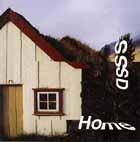
SSSD - Home

this one on the whole, besides being varied with an all star contributor list, belongs to the more difficult, stringent, and kurmudgeony school of improvisation. not my favorite but still a very interesting and sometimes very good listen.

1. Scott Fields (electric guitar), and Yoshiko Kanda (percussion)
2. Utah Kawasaki (analog synthesizer), and Yuko Nexus6 (cassette player)
3. Gene Coleman (bass clarinet), Richard Teitelbaum (electronics, laptop computer), Brett Larner (koto), Ko Ishikawa (sho), and Aya Motohashi (hichiriki)
4. I.S.O.: Yoshimitsu Ichiraku (amplified percussion), Sachiko M (sampler with sine wave), and Yoshihide Otomo (electric guitar, turntable); and Kang Tae Hwan (alto sax)
5. Stefan Keune (sopranino sax), John Russell (acoustic guitar), Brett Larner (bass koto), and Masahiko Okura (alto sax)
6.Toshihiro Makihara (percussion), Brett Larner (gu zheng), Utah Kawasaki (analog synthesizer), Ami Yoshida (voice), Yuko Nexus6 (sampler), and Taku Sugimoto (6-string bass guitar)
7.Carl Stone (laptop computer)
8. Kazuo Imai (electri guitar, electronics), and Elliot Sharp (electric guitar, electronics, sax)

All recorded live at Deluxe in Azabujuban, Tokyo. Released July, 2001

Deluxe Improvisation Vol. 2 PART A PART B

a re-up of this collaboration between our buddy Otomo and some Korean friends of his:

Otomo Yoshihide, Park Je Chun, Mi Yeon - Loose Community


as per requested, a re-up of the classic I.S.O - I.S.O. (live in a zen garden)

and another re-up:
Taku Sugimoto & Kevin Drumm - Den

2008/05/20

NGOMA presents G-SOLO LIVE: Jun 07


a lot of people i have never seen before came out, i guess either curious or in the know. G's flow was pretty tight, the beats were fire, a really good night.

more photos and videos here.

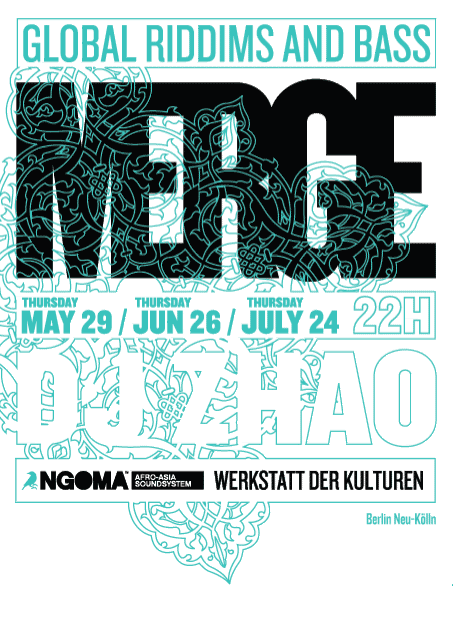
MERGE: May / Jun / July

location: Werkstatt der Kulturen
Address: Wissmannstr. 32 [ U Hermannplatz ] Berlin Neu-Kölln
Tel: 60 97 70-0 Website: www.werkstatt-der-kulturen.de Email: Werkstatt.Kulturen@t-online.de
...............................................................................
doing a (G?) solo new series of monthly events (last thursday of each) which takes place in a culture center in Neu Kolln. I'm curious to see how they will turn out as the area is only beginning to get filled up with hipsters, and while the location is very cool, a nice sized basement bar with dancefloor and decent sound, it is not EXACTLY known as a hot night spot. please do come out, bring a date, roll deep with ya crew, or just pop up G-Solo Gangasta Style and say hi, enjoy some of the bumpinest groovinating music you'll never hear anywhere else in Berlin.

2008/05/17

OCORA: India part 2

an entirely Northern edition, we shall dip into the Karnatic south later. the Sangeet Trio is lovely as can be... and I really love the 2 Gopal Krishan albums here: his sound is very special for me... wicked.


Sangeet Trio :
Vishwa Mohan Bhatt, guitar
Tarun Bhattacharya, santur
Renu Mojumdar, bansuri)
recorded Dec. 16, 1995, Théâtre de la Ville, Paris

"This is an unusual ensemble for Indian classical music. First of all, instead of a soloist accompanied by the tabla drums and the sitar-like tampura, there is a trio plus accompanists. The trio consists of three unusual instruments: bansuri flutes (played by Renu Mojumdar), a modified guitar (played by Vishwa Mohan Bhatt), and the Middle Eastern santur hammer dulcimer (played by Tarun Bhattacharya). The guitar is especially interesting. It has a short neck, four melody strings, three drone strings, and 12 sympathetic strings. It is played with a metal slide in a quasi "slack key" style. The slide is frequently used to bend notes in the Indian fashion, but when Bhatt resorts to more of a finger-picking style, it sounds American. The trio plays "Raja Jog" at this live concert in Paris. It is an exceedingly long raag (66 minutes), and the alap -- the opening 18-and-a-half-minute slow movement -- might be a little tedious for Western ears. The two faster sections are more engrossing. The musicians chose a raag whose intervals recall the American blues, and there is a repeated five-note figure that could almost be a jazz riff. The overall effect is more like jazz than blues. These allusions are achieved without any straining for effect, if they are indeed conscious at all. Good fun.(AMG)"

Inde du Nord: Sangeet Trio en Concert


"The vichitra veena is a slide instrument used in North Indian classical music, but it has become quite rare today. Gopal Krishan is one of only a handful of players with recordings available. I have heard them all, and I've heard all of GK's available CDs, and I believe the raga JOG on this double album is his best effort on record.

As you may or may not know, JOG is similar to the American blues scale - it uses both forms (flat/natural) of the 3rd note, and the flat is a pretty high flat, just like in the blues. It's a nice effect to hear something so like a slide guitar play something so like the blues - so like, and yet so unlike ...

G.K. is very fond of LAYAKARI, playing around with the rhythm, and he does it a lot here in JOG. Tabla player is Latif Ahmed Khan of Dehli gharana, student of ustad Gami Khan, and he has played good solid Dehli style. Tabla sound is good, not the least tinny. He has not played any Zakir Hussain fireworks, just good accompaniment with communication and togetherness with GK in layakari parts. You will be hearing them both make small mouth noises on various "SAM" points; this recording comes very much alive. Interestingly, ALAP is comparatively speaking pretty fast and GAT is comparatively slow tempo, though ending with some JHALLA.

(Gopal Krishan by the way learnt from his father, called Nand Kishor, later with Gwalior gharana teacher Khubchand Bramchari - his rival on the vichitra veena Dr Mustafa Raza plays Gwalior style - and finally went to Ravi Shankar. So the style he plays here reminds of Ravishankar more then Gwalior, hence the layakari. He plays I think a total of 4-6 slightly out-of-tune notes in JOG - he's human! he's human! (Amazon Reviewer)"

India: Gopal Krishan - Inde du Nord, L'Art de la Vichitra Vîna
DISC 1 DISC 2-A DISC 2-B


Gopal Krisnan - Dhrupad et Khyal
PART-A PART-B


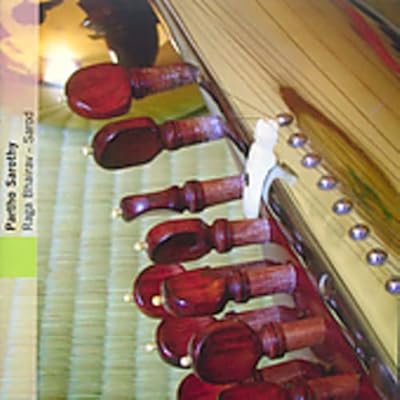
Inde du Nord - Raga Bhairav – Sarod - Partho Sarothy: PART A PART B

2008/05/12

OCORA: India part 1

i have a crazy and over ambitious idea to upload and make available the (very near) entirety of the Ocora catalog (400+ including the very rare early vinyl-only releases) on this here blog. a monolithic task, and I will likely die of old age before it is complete, so let's get this party started PRONTO. (in reality what will likely happen is the uploading of what i consider the Crème de la Crème...)

lately I have been listening to a lot of the recordings from India, so it is i s'pose as good a place as any to jump in - here are 4 + 1 from the past, with much more come.

"Balaram Pathak is a very peculiar sitar player. After many years of listening to Indian classical music I have never come across someone of this style. The use of flageolett technique is typical for his way of playing - something I have never heard with any other sitar player.

Even though I searched for long in India and in Europe I couldn't find further recordings of Balaram Pathak (other than the original Ocora Double LP of which this is a CD re-issue, which had one more Raga), and although the booklet says he lives in Delhi since 1981, nobody I asked there had ever heard of him. Strange, I thought, since he is definitely a true master of sitar. All I could think of is that some people take great caution to prevent him from playing on stage and recording music in India.

Actually there is some kind of "music mafia" in India, very active in this field. They don't let anyone come up from outside their own circles. I was told the great sarod master Amjad Ali Khan was sort of the head of this "mafia". If you don't bow to him, you'll never find a chance to record in India, since any company would have to face that Amjad Ali Khan and his circle would never record for them anymore - and his CDs and cassettes bring good money." -- Ambrose Bierce (to whom we owe the original rip)

Inde du Nord / Balaram Pathak

1. Raga Bilaskhani Todi - Alap, Jod, Gat (Rudratal)
2. Raga Kinari Bhairavi - Alap, Jod, Jhala, Drut Gat (Tintal)
3. Raga Mishra Pilu - Alap, Sitarkhani Gat (Adhatal)

Balaram Pathak - sitar
Vinode Pathak - tabla

and speaking of the God Father of the Indian Classical Music Mafia, here is the O.G. son of a bitch himself. (original upload also from Ambrose)

"Mian-ki-Malhar is a rainy season raga composed by the great North Indian composer Mian Tansen. It is to be played in the late night, or, during the rainy season, at any time of the day. Its associations are depth, seriousness, and a majestic and heroic demeanour. Its ascending scale is pentatonic, the descending scale is heptatonic.

Zilla-Kafi is a mixed raga of recent origin, and it is here used as the basis for a raga-mala ("garland of ragas"), where many different scales are used in succession"

Inde du Nord / Amjad Ali Khan

Amjad Ali Khan - sarod
Shafat Ahmed Khan - tabla

"Born in 1927 in Rajasthan's Udaipur, his father was a musician "at the court of the Maharaja of Udaipur" who played the dilruba, described in the notes as "a sort of cross between the sitar with its movable frets and the sarangi with its bow," who "worked out a special and rather unusual fingering technique for his son . . ." to play the sarangi, starting at age 6. Ram Narayan pioneered the use of the sarangi as a classical solo instrument. Ram Narayan studied as a child under a local sarangyia and also learned dhrupad, "a hieratic and sober genre from which khyal originated," with the famous Dagar brothers (cf. Music of the World CDT-114). "The essential approach of dhrupad stands out in the alap elaboration more particularly." At 16 he was seeking employment at All India Radio in Lahore as a vocalist, "a ploy to increase his chances of employment. The producer he met did not take long to notice the scars on his nails, which he knew at once were the result of intense sarangi practice (from 10 to 16 hours a day)." " -- Arcturus, original uploader.

"By the time he was just 14 years of age, Ramnarayan was a music instructor in a college in Udaipur; and by the time he was barely 16 years of age, he was appointed staff artiste by the All India Radio and posted in Lahore in undivided India. This was in 1943. By 1947, Ramnarayan had accompanied some of the foremost male and female classical singers of the time. His playing was both inspired and inspiring. He was able to spontaneously improvise as well as reproduce tonal nuances of the singers he accompanied. He played in the style of their ‘gharana’ and made the sarangi both speak and sing in what we may now call, in retrospect the ‘gayaki ang’. . . .

He decided to become a free-lance sarangi artiste in Bombay where he could make himself financially independent by playing for commercial cinema as well as by cutting discs of his own. He recorded his first 78 r.p.m disc in 1950 with His Master’s Voice (now EMI) in Bombay. It is now a collector’s item with its beautiful rendering of the ragas Lalit and Marwa.

When Ramnarayan arrived with his sarangi in Bombay, film music directors did not know the potential of the sarangi. When he left the commercial film industry a few years later, music directors wondered what they would do without the sarangi of Pandit Ramnarayan. But Ramnarayan’s sight was set on something else that no one at that time thought was possible. His brother, Chaturlal accompanied Ali Akbar Khan on his pioneering visit to the West. Yehudi Menuhin welcomed and introduced them in the historic album “The Music of India”. In 1964, Ramnarayan and Chaturlal toured Europe and created a sensation." -- author unknown

"At first a rather coarse affair, the sarangi has become through the ages a sophisticated bowed instrument whose imitative capacity to reproduce the sound and texture of the voice is without comparison. Hence its use for accompanying singers... Its actual shape and structure probably date back to the 14th Century and it is mentioned in a 16th Century text. Successive improvements came later.

Its technique is unique in the fact that the back of the nails glide along the three gut strings placed 1 centimeter above the neck, which allows all types of phrases characteristic of Hindustani music: meend, which are glissandos prevalent in dhrupad, and gamakas, which are oscillations made around the notes and widely used in khyal. (Talc powder is used in order to ease the gliding of the palm on the side of the neck).

The gliding of the nails on the strings gives in the slow tempi a special flavour and much precision in the production of a continuous sound and it also enables the performer to display great virtuosity in rapid tempi.

The perrenial charm of the sarangi lays in its sympathetic strings. Of all the the Indian instruments which have them (like the sitar and the sarod), it is the one that creates a halo of sounds for the most part continuous and integrated in the melodies, this being due to the everlasting vibrations emitted by the friction of the bow. The considerable umber of metallic strings further increases the resounding force (as compared to the 11 or 15 sympathetic strings of the sitar and the sarod). But their role is not confined in enriching the general sound effect: when perfectly tuned, they give a useful harmonic reference in order to reach the right notes as they start vibrating only on the impulse of the notes played on the frequency which correspond to any of them.

1. Rag Purya-Kalyan: Alap, Jor, Jhala
This traditional rag is played in the evening.

This noble and sometimes austere rag shows also a feeling of tenderness. It is rendered here in a very classical way, according to the melodic laws ruling it. The third and seventh notes are particularly important. The gentle strokes of Ram Narayan's bow gradually bring out the typical phrases of the rag (rupa), first in the slow and non-rhythmic alap, second, in the jor with the increasing speed of the tempo, third, in the very fast taan-s of the jhala (23'45 onwards).

2. Rag Purya-Kalyan: Bandish (Teental), Drut (Ektal)
A bandish is a composition for singing. This term can be applied to the sarangi as it is so associated with singing."

-- from the cd notes by Christian Ledoux. and here is wiki on sarangi

Inde Pandit Ram Narayan Vol. 1

alternate MEDIAFIRE LINK

Ram Narayan: sarangi
Suresh Talwalkar: tabla

recorded Paris 1978 & Bombay 1979


"The soundtrack of Satyajit Ray’s famous film, with top musicians like Vilayat Khan (sitar), Bismillah Khan (shenaï oboe), or Imrat Khan (surbahar)." -- from liner notes. this one is a lot more lively, even aggressive, than the others...

Inde Le Salon du Musique

just a reminder billybilly brought us this bad ass recording a while back. find it here.

2008/05/10

Ennio Morricone io box Disc 3 Track 1

i know this dude was part of Gruppo Improvvisazione Nuova Consonanza in the 60s, and has played with AMM (if I'm not mistaken), and so has real credentials under his belt. but i had put off exploring his daunting body of work, party because a lot, most? of it is the kitschy spaghetti western film stuff that he is known for, which does not interest me that much.

but today. oh my lord. bless my i-pod and its random function.

disc 3 is "Chamber Music" and comprises some criminally gorgeous stuff. entirely outrageous. tones that would make Lucier proud. free flurries of flutes like Evan Parker's circular breathing technique adopted by mythical forest furry creatures. ok before i start applying even more outlandish similes hear for yourself:

Track 1

(by the way disc 1 is the film stuff (yawn), 2 is pretty great Chopinesque piano music, and 4 is symphony music - haven't really listened - can i up just disc 3 even though it is commercially available? i dunno... need some convincing)

anyone know more about this aspect of his work? the more avant C / contemporary music / improvisation side? i did some googling but couldn't find any good info. and dude has to have a bunch of other styles / periods, right? anyone care to break it down a little bit?

also, the "new music" and jazz heads here, is there a good forum to discuss things like this or Scelsi or Spectral shit?

cheerios...

2008/05/05

pieces from Al Sur 1

periodically i will be posting selections from the wonderful catalog of the now defunct Al Sur ("the wall" in Arabic) label, made available by the ever so generous and honorable Ambrose Bierce.

a fun and catchy album of soulful dance and pop tunes which welds together many styles: "Anefas Trankil, a.k.a. Akli D. was born to a musical family in Kabylia. Since leaving Algeria, he has lived in France and California, and Anefas Trankil, recorded in Paris, is his first complete album. The album has fascinating variety, from the pretty, banjo-driven "Taqb-Aylit (Kabylia)" to the rich polyrhythms of "A Tayri (Love)." One strong pop song, "Azul (Greetings to you)" has an interesting Afro-Celtic folk aspect to it, perhaps reflecting Akli's work with Celtic musicians in the United States. The words say, "Hey, mountains of Africa. Send us back the echo of a free people, the ones known as Tuareg." "Akka I D-Us (Look there)" is a beautiful, lightly funky song emphasizing the fast 12/8 rhythm common in much traditional Berber music. The notes (in French and English) and artwork are good. In the tradition of Matoub Lounes, Akli D. focuses poignantly on the plight of his people struggling for rights and recognition in Algeria."

Akli D. - Anefal Trankil

Akli Dehlis - vocals, 12-string guitar
Abdenour Mohamed - mandolin, banjo
Malek Hadjiat - e-guitar
Rachid Mammar - derbouka, bendir, karkabou, tambourin
Abdenour Djemai - guitar, banjo
Zahir Djemai - vocals, mandolin
Pierre Beaucamps Ebongue - bass
Hervé Le Bouche - drums
Jef Sicard - Clari-Ney
Sylvie Aioune - vocals
Aline Hurault - vocals
Enriqué José - guitar

download

stately Persian classical music from Iran. google translated from French: "Eminence recognized the music Iranian Dariush TALA'I, which runs through the stages of the world for over 25 years, was the first to discover the Western public that these Persian lutes are târ (six-stringed lute) and setâr (three-stringed lute). ... After several discs, especially among Ocora, TALA'I began an Integral of the Persian music, including 5 volumes have been published in Al Sur. Meanwhile, Al Sur invites us to listen to the Lord in a context that particularly likes the scene, accompanied by a young prodigy percussion Iranian KHALADJ Madjid, who has already done for Al On a percussion solo album and another with the ney flute player Hossein OUMOUNI.

To my knowledge, no disk had recorded the meeting TALA'I and KHALADJ. This is now done with this recording of a 1996 concert in Utrecht. Through 14 themes chained, Dariush TALA'I explore, exclusively târ, different aspects of Persian music, a discipline with a precision that does not prevent the inventiveness and experimentation discreet. The rhythmic support of the tombak (or zarb, a term probably more widespread) Madjid KHALADJ revival, with a high degree of refinement, the connection of melodic târ, which gives us a great moment of poetry modal for the greatest satisfaction ears demanding and knowledgeable." -- Stéphane Fougère

Dariush Tala'i & Madjid Khaladj - En concert à Utrecht le 30 Août 1996

Dariush Tala'i - tar
Madjid Khaladj - tombak

download

for all you bad, bad people out there (you know who you are), another gorgeous recording of Liturgical Chant from the first ever Christian state of Armenia. again google translates from French: "Akn aims to revive and develop the traditional interpretation of Armenian liturgical chant. The performances reflect the work developed under the direction of Aram Kerovpyan since 1990, which led to the creation of the Centre for the Study of Armenian liturgical chant, founded in January 1998 in Paris. ... traditional songs of the Armenian liturgy, including sharagan (hymns, tropes), form the body's largest directory. The psalmodie récitative and mélismatique, song of the Book of hours and optional melismatic singing, singing group or solo, are also part of the programmes submitted. Akn interprets this directory monophonic and modal in its original form. The drone is an integral part. Akn is a mixed choir, composed of 14 to 16 participants." -- http://akn-chant.org/fr

Akn - Chants liturgiques arméniens


download

Giacinto Scelsi - Music for Wind Instruments and Percussion

"This collection of the late Italian composer Giacinto Scelsi marks the recorded debut of many of his smaller works. Ranging from 1954-1966, Scelsi's elongated tonal studies are given a rapt performance here by a nameless Dutch ensemble that carries off the task without flaw or unnecessary adornment (a constant temptation, it seems, with Scelsi's work). Included here are three fragments of I Riti, the ritual march from the composer's Funeral for Achilles. Non-rhythmic timbral patterns, spare in posture and deep in resonance, constitute an interior motion. On Ko-Lho for flute and clarinet, from 1966, Scelsi concentrates on the variations in similar whole tones the instruments are capable of producing. These variations may be timbral, or that may be in the embouchure itself, but they sound at times so remarkably similar as they exchange semi-quavers that it is nearly impossible to tell them apart. Likewise, Rucke di Gluck for piccolo and oboe from 1957, while much more primitive in feel and approach, offers the turning of tone from one pitch to the next as a meeting place for timbral investigation. Also from tense, varying durational statements, harmony is explored not as a device for unification but rather as a spatial consideration of interstitial elements. The truly revelatory works occur near the end of the set with Hyxos for alto flute, gongs, and cowbell from 1955 and Quattro Pezzi for trumpet solo from 1956. In both these works, Scelsi looks past serialism's limited investigations of tonal dissonance and finds a type of consonance in duration and pitch without regard for scalar mathematics. These are gigantic leaps in the consideration of spatial relationships in compositional technique and sonic placement in the tonal one. This is a highly rewarding and necessary addition to the Scelsi canon, and an excellent introduction to the "aegis mysterium" that Scelsi created in 20th century music." --Thom Jurek, All Music Guide

1 I Riti: Ritual March, "The Funeral Of Achilles" For Percussion (1962) (Fragment) (0:57)
2 Ko-Lho For Flute And Clarinet (1966): I, II (7:13)
3 Pwyll For Flute Alone (1954) (4:15)
4 I Riti: Ritual March, "The Funeral Of Achilles" For Percussion (1962) (3:05)
5 Ixor For Bb Clarinet (Or Other Reed Instrument) (1956) (4:00)
6 Rucke Di Guck For Piccolo And Oboe (1957): I, II, III (8:56)
7 Hyxos For Alto Flute, Gongs And Cowbell (1955): I Tranquillo, II Con Moto, III Tranquillo (9:49)
8 Quattro Pezzi For Trumpet Alone (1956): I, II, III, IV (9:16)
9 I Riti: Ritual March, "The Funeral Of Achilles" For Percussion (1962) (Fragment) (1:14)

OUT OF PRINT

2008/05/04

Bismillah Khan & Vilayat Khan - A Rare Jugalbandi

"Tentatively titled 'A Rare Jugalbandi' the album brings together musical maestros Vilayat Khan with Sitar and Ustad Bismillah Khan with Shehnai. Recorded live in 1999, both the legends came together relaxing with Yaman Aalap." -- from musicindiaonline.com

a recording from very late period of these maestros, it does not match the sickness of the one several posts down -- but it it still a beautiful album and for those addicted to the sound of Bismillah's shehnai it is a treat.

find it at this new blog.