2006/09/27

Various - opensource.code

Various - opensource.code

OK let's get some boogie up in this bitch. albeit in an ethereal, abstract, minimalist sort of way... each of these tracks are very well crafted, and follow their own design to logical conclusions. (what more, one might ask, can we want from any piece of art?)

Label: Source Records (DE)
Country: Germany
Released: 2002
Notes: In co-operation with Ableton

1 Jan Jelinek Music To Interrogate By (6:08)
2 S.E. Berlin Toninas (5:50)
3 Robert Lippok 6 a.m. (5:18)
4 Bton Nocturne (4:11)
5 Sutekh Asscr (6:30)
6 Thomas Brinkmann Momoklick (4:43)
7 Smyglyssna Microholiday (4:39)
8 Move D µst (7:01)
9 Alex Cortex Laconic Track #1 (Tom Thiel Remix) (4:14)
10 Monolake White II (9:27)
11 Studio Pankow Linienbusse (7:08)

http://rapidshare.de/files/34608861/Opensource.Code.zip.html

2006/09/26

Spectralism (and related) 13 albums - ALL WORKING (Dec 12 2006)

discovering these composers is the single most exciting event in my musical life this year (very likely this decade)

i knew nothing of this subject, other than that it is a compositional movement originating in France sometime in the 60s, and that it vaguely involves analysis of specific sound characters in terms of a bandwidth or spectrum. (and that one of my favorite contemporary composers, Kaija Saariaho, was influenced by it)

then i heard these albums. head blown clean off. immediate reaction was surprise at how listenable it all is, when I thought it would be incredibly difficult like much of Stockhousen or Xenakis. the work of these composers indeed gives immense pleasure at the same time as it is extremely intellectually stimulating. over the past month or so I have been repeatedly listening and I can not get enough of them. volumes can be said about each artist and each piece of music so I will refrain from writing much... except that to my mind this music seems like some kind of final frontier of western classical music, direct descendent of a lineage including the aforementioned Stockhausen, Xenakis, and Scelsi, Nono, Ligetti, etc.

there are very limited resources on the web but I will add some links and information about the music and composers later. though I think it is just as valid, if not preferable, to approach this amazing material with almost zero knowledge or prejudice. and if anyone out there cares to drop some knowledge please do, I'm all ears.

thanks 300 million to Arcaf, grasprelease, and Knowby.


Tristan Murail - Gondwana; Désintégrations; Time and Again

1. Gondwana, for orchestra
2. Desintegrations, for magnetic tape & 17 instruments
3. Time and Again, for orchestra

Conductor: Yves Prin, Karl-Anton Rickenbacher
Orchestra: Orchestra National de France, Beethovenhalle Orchestra, Ensemble de L'Itineraire
Label: Disques Montaigne

http://rapidshare.de/files/33907503/Murail__Tristan.zip.html
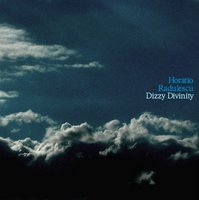

Horatio Radulescu - Dizzy Divinity (not original cover)

1. Dizzy Divinity I
2. Byzantine Prayer
3. Frenetico il longing di amare
4. Capricorn's Nostalgic Crickets II

Conductor: Horatiu Radulescu (assistant Pierre-Alain Biget)
Performer: Pierre-Yves Artaud
Orchestra: Orchestre Francais de Flutes
Label: Adda

http://rapidshare.de/files/33468286/HR.zip.html
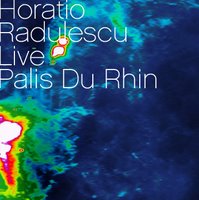

Horatio Radulescu - Live Palis Du Rhin (Disques Montaigne) EU (not original cover)

inner time II op42
hommage à calder
pour sept clarinettes en si bémol (1983) 56.02

armand angster clarinet system :
armand angster, jean-pierre peuvion, vincent jacquemin,
laurent berhomier, jean-marc foltz, jean-louis bergerard, denis tempo
live recording
palis du rhin, musica 93, strasbourg 22 septembre 1993

http://rapidshare.de/files/32903867/horatio_radulescu_-_Live_Palis_du_rhin.rar


Gérard Grisey - Les Espaces Acoustiques

cd1
1 prologue (1976) pour alto solo 17.27
gérard caussé - alto solo
2 périodes (1974) pour sept musiciens 12.47
3 partiels (1975) pour 18 musiciens 18.25
ensemble cour-circuit
direction pierre-andré valade
cd2
1 modulations (1976/77) pour 33 musiciens 13.20
2 transitoires (1980/81) pour orchestre 17.28
3 épilogue (1985) pour 4 cors solos et orchestre 7.43
frankfurter museumorchestrer
direction sylvain cambreling

http://rapidshare.com/files/7144513/g_rard_grisey_-_les_espaces_acoustiques_1.zip.html
http://rapidshare.com/files/7146365/g_rard_grisey_-_les_espaces_acoustiques_2.zip.html


Gérard Grisey -Vortex Temporum

vortex temporum
1 11.17
2 10.46
3 18.23

4 talea 16.38

ensemble recherche
kwane ryan- direction
freiburg november 1996

http://rapidshare.de/files/27349165/vortex.rar.html


Gérard Grisey - le noir de l'étoile (FLAC) - thanks to MaxP

1 premier mouvement 22.46
2 pulsar vela 2.46
3 deuxième mouvement 11.00
4 pulsar 0329+54 2.06
5 troisième mouvement 19.18

les percussions de strasbourg
jean-paul bernard, claude ferrier, bernard lesage
keiko nakamura, francois papirer, olaf tzschoppe
paris cité de la musique 30 mars 2003

http://hotfile.com/dl/101076133/5724013/


Hugues Dufourt - Erewhon (1974-76) pour 6 percussionistes et 150 instruments

1 erewhon I 8.29
2 erewhon II 27.06
3 erewhon III 18.09
4 erewhon IV 12.40
les percussions de strasbourg
direction lorraine vaillancourt
paris 27-29 mars 1999
accord

http://rapidshare.de/files/27463224/nowhere.rar.html


hugues dufourt - saturne, surgir

1 Saturne (1979) 43.16
pour ensemble instrumental, instruments électroniques et 6 percussions
ensemble l'itinéraire
direction peter eotvos

2 Surgir (1984) 30.25
pour grand orchestre
orchestre de paris
direction claude bardon

http://rapidshare.de/files/32836974/hugues_dufourt_-_Saturne___Surgir.zip.html


Hugues Durfourt - the watery star

1 the watery star (1993) 25.10
pour 8 instruments
2 an schwager kronos (1994) 13.35
pour piano
3 quatuor de saxophones (1993)14.25
4 l'espace aux ombres (1995)22.33
ensemble fa
direction dominique my
paris mars et mai 1995, juin 1996


http://rapidshare.com/files/7146461/hugues_dufourt_-_the_watery_star_1.zip.html
http://rapidshare.com/files/7192988/hugues_dufourt_-_the_watery_star_2.zip.html


André Boucourechliev - les archipels (1967-1971)

1 archipel I 10.54
pour deux pianos et deux percussions
claude helffer, hakon austbö - piano
roland auzet, jean-pierre drouet - percussions
2 archipel II 19.03
pour quatuor à cordes
quatuor isaye
3 archipel III 11.05
pour piano et 6 percussions
claude helffer - piano
ensemble les pléiades
4 archipel IV 13.45
pour piano
george pludemracher -piano
5 anarchipel 11.52
pour ensemble de 6 instruments
brigitte sylvestre - harpe
elisabeth chojnacka - clavecin
françoise rieunier - orgue
françois-frédéric guy - piano
roland auzet, jean-pierre drouet - percussions

live in maiosn de radio france paris december 11, 1993
MFA 216001

http://rapidshare.de/files/28045632/archipels.rar.html


Globokar by Globokar

1 prestop II (1991)pour trombone et électronique 16.34
2 échanges (1973) pour cuivre seul 5.44
3 kolo (1988) pour choeur mixte, trombone et électronique 23.06
4 discours II (1968) pour cinq trombones 15.04
5 cri des alpes (1986) pour cor des alpes 5.27

vinko globokar -trombone, cor des lapes
quatuor de trombones "four bones"
choeur apz tone tomsic de ljubljana
enregistré février 1992 à ljubljana

http://rapidshare.com/files/7146785/globokar_by_globokar_1.zip.html
http://rapidshare.com/files/7194152/globokar_by_globokar_2.zip.html


Michel Redolfi - desert tracks

1 too much sky 9.15
desert tracks
2 ouverture 5.40
3 mojave desert 7.13
4 death valley 11.26
5 palm canyon 11.13
pacific tubular waves
6 inner tube 3.56
7 crystal lips 3.32
8 a smooth ride 3.49
9 pacific motion 9.30
10 the underwater park at sunset 4.05

electro-acoustic music by michel redolfi
ina / grm 1988

http://rapidshare.de/files/25887068/detracks.rar.html


Philippe Leroux

1 (d')Aller 17.37
concerto pour violon et seize instruments (1994/95)
annick roussin -violin
orchestre poitou-charentes
dir : pascal verrot
2 AAA pour sept instruments (1995/96) 12.54
ensemble court-circuit
dir : pierre-andré valade
3 souffles pour quintette à vent (1996) 16.49
le concert impromptu
4 lal pour harpe celtique et guitare (1989) 11.36

christophe saunière - harp
caroline delume - guitar

recorded january 17/18, 1998 and november 25 1996(1)
grave records GRCD13

recorded january 17/18, 1998 and november 25 1996(1)
grave records GRCD13

http://rapidshare.de/files/25977194/leroux.rar.html

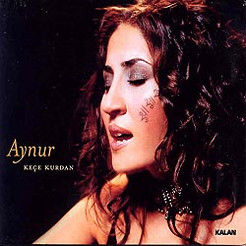
Aynur -Keçe Kurdan

if I'm not mistaken, this is the vocalist who stole the show in Crossing the Bridge: Music of Istanbul. through out much of this album her amazing voice soars over insistent rhythms with a furious energy, and even the calmer tracks have a heart-wrenching, hair-raising intensity about them. the music is mostly traditional with subtle modern touches - cinematic, grandiose, and awe-inspiring.

thanks to oiche.

http://rapidshare.de/files/33023896/Aynur_-Ke_e_Kurdan.part1.rar
http://rapidshare.de/files/32980109/Aynur_-Ke_e_Kurdan.part2.rar

Basant Bahar Vol 1 Bismillah KHAN

music extracted from Vol. 1 of an out of print cassette series which have never been re-issued. Lovely through out, track 1 is dedicated to the vocalist Amaonkar Kishori, and track 2 to Bismillah Khan. thanks to MarcoDisco.

1) Raga Hamir Bahar (29'45)
2) Raga Basant Bahar (29'40)]

http://rapidshare.de/files/33240477/KHA_Bis_VA_Bas_Bah.zip.html

2006/09/25

Steve Lacy - The Window (NEW LINK)


an out of print masterpiece. another one of those recordings that I will likely NEVER tire of, no matter how many times it is played.

REUPPED!

2006/09/23

John Cage - Ryoanji

a beautiful, if chilling album of eerily atonal woodwind phrases and sparse percussive punctuation, the closest to traditional Japanese music I have heard of Cage recordings. an hour long track of indeterminate No Theater, like the proverbial moon lit night in Asian ghost stories where the borders between this world and the next is perilously thin and then altogether vanish, in which wispy shadows and transluscent spirits make their presence, and their woe, known to mortals.

click on back cover for recording details.

http://rapidshare.de/files/22638753/Ryoanji.rar.html

while listening to this, I could not help but think of the idealized and romantic view of Japanese Zen Buddhism through the Western eye. particularly, I wonder if Cage was familiar with the blood curdling history of Japanese Zen's close relationship to Imperialism, nationalism, and unspeakable war-time atrocities of early 20th Century. I wonder if he knew or even studied with any of the enlightened Zen Masters who waxed poetic, in the language of Buddhism, about the virtues of torture, rape, and murder on a mass scale.

excuse my digression on this extremely disturbing yet very important topic -- it has been, and still is, largely ignored and repressed by spiritual institutions world wide.

for more information:

http://ftrsummary.blogspot.com/2006/06/ftr-553-first-refuge-of-scoundrel-part.html
http://www.mandala.hr/5/baran.html
http://www.thezensite.com/ZenBookReviews/ZenAtWar_Loy.htm
http://www.amazon.com/Zen-at-War-Daizen-Victoria/dp/0834804050

it has just been brought to my attention that Cage learned what he knew about Zen from Daisetz Teitaro Suzuki, several encounters with whom is described in Indeterminacy. and D.T. Suzuki was one of the instrumental spiritual proponents of the rise of Japanese nationalism, fascism, and milliatarization. he is extensively talked about in Zen At War.

an excerpt from ftrsummary.blogspot.com

The noted Zen writer D. T. Suzuki's early writing reflected the influence of Soen's teachings. (To be fair, by 1940, Suzuki had changed his tune considerably). In 1896 as the war with China began, he wrote, ‘religion should, first of all, seek to preserve the existence of the state.’ Like his teacher, he saw the enemies of Japan as ‘unruly heathens’ who needed to be tamed and conquered or who would otherwise ‘interrupt the progress of humanity. In the name of religion, our country could not submit to this.’ Going to war, he called ‘religious conduct.’ Suzuki used poetic language in praise of Japanese soldiers. ‘Our soldiers regard their own lives as being as light as goose feathers while their devotion to duty is as heavy as Mount Taishan (in China). Should they fall on the battlefields, they have no regrets.’ This metaphor of ‘goose feathers’ would become a major point of military indoctrination, teaching recruits and the young kamikaze (‘divine wind’) pilots that their individual lives were meaningless and had no weight. Only total devotion to the emperor would give their existence meaning. Suzuki also popularized the bushido concept of the ‘sword that gives life’ that was used over and over again to rationalize killing. Years later, the Japanese ambassador would use this phrase on ‘the sword that gives life’ in a speech at Hilter's chancellery in Berlin following the signing of the Tripartite Pact on September 27, 1940.

2006/09/19

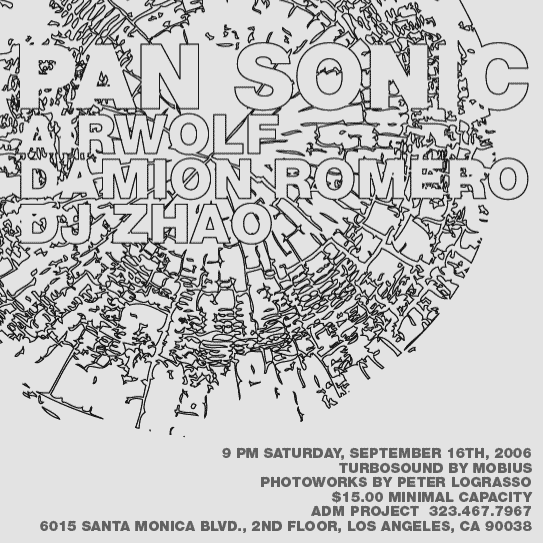
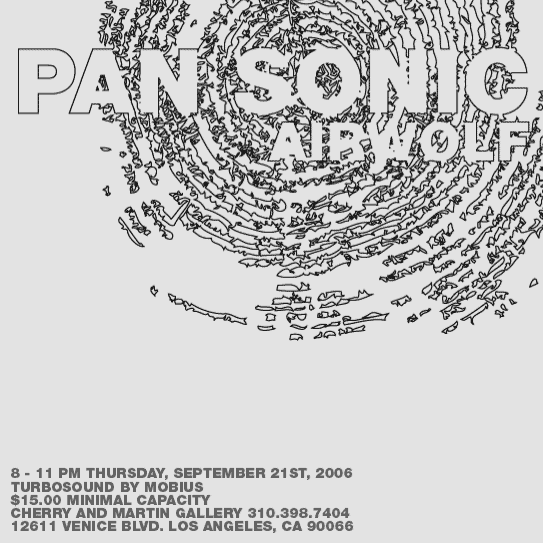
Pan Sonic Show Review

rumor has it that Art Forum was there and a review of it will appear in the next issue, but until then, for those who couldn't make it:

apart from the embarrassingly weak Air Wolf, who played the most wince-inducing entry-level trip-hop with pathetic keyboard melodies like some 5th generation imitation of Boards of Cannada, MASSIVE performances from everyone else.

the audience was about 100 strong in the 2nd floor gallery space overlooking Hollywood Forever Cemetary, as Damion Romero's rumbling wall of feedback re-arranged neurons and internal organs alike in an analog noise session of throbbing bass frequencies. standing in the room surrounded by powerful stacks of "turbo-sound", the music, like heliocopter rotor-blades or Gyoto Monks, is so powerful and all encompassing that bodies vibrate, senses distort and the mind is all but wiped clean for the entire duration.

I played 3 dj sets, about 1.5 hours all together. electro-acoustic static and "no-input" feedback systems co-mingling in timeless fashion; fragmented shards of digital debris sometimes punctuating the stretched out passages; and occasional beats erupt by way of dubstep. highlight is a 30 minute set right before Pan Sonic took the stage - an uninterrupted mass of pure and over-tones including David Hykes, Ryoji Ikeda, Alvin Lucier, and Rafael Toral which transformed the space into a hypnotic psychoactive resonance chamber.

Pan Sonic gave an absolutely devastating performance. comprised of brand new material from the forth-coming album which takes off from the second disc of Kesto Box - track after track of menacing, concise, beats driven, unrelenting intensity brocken by short interludes of tone and texture. metalic, ominous industrial noise-dub like a pack of demon-wolves, like the wrath of old gods reborn in steel -- the exhilaration of consistent, doom laden dark rush of adrenalin has no comparison in any genre, be it Noise, Techno, Hiphop, or Death Metal.

everything was professionally recorded, expect mp3's soon.

2006/09/10

Pan Sonic - 2 live albums

roughly 1 week from the show, here are 2 exquisite live recordings from Pan Sonic:

Live NYC is from 1995 -- the plateauxs and valleys of its 2 long tracks contain the icy minimalism of their early 4/4 techno (completely abandoned shortly after) as it does the scary and beautiful alien sound world of their later abstract noise poetry.

the other recording, simply titled Live, collect 9 pieces of performances from different locations, probably late 90s or early 00s, and is a somewhat well rounded examination of various types of their masterful sound constructions. as is always with Pan Sonic, a dynamic of punishment versus reward is often employed - repetitive and slightly annoying interludes which tests the patience of the listener are invariably followed by revelatory significant passages. a couple of the tracks on this are so awesome they give me the shivers every time: pulsating, rhythmically askew beats, warbling midrange accents, and the ebb and flow of sublime pure overtones growing and vanishing like rays of moonlight pouring into an expanse of dark, cavernous space.

brutal, delicate, powerful, subtle, abrasive, meditative, monolithic, gorgeous, psychoactive and deeply transporting -- these additions to their studio albums will serve the dedicated fan well, and are also good places to start for those not familiar.

both albums are here:

http://rapidshare.de/files/32022586/PAN_SONIC_LIVE.zip.html

don't forget to RSVP if you want a ticket as it will surely sell out:

2006/09/08

John Fahey & Jim O'rourke - Live on WNUR

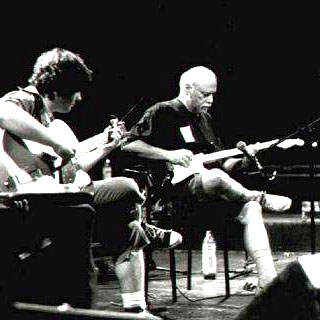
this session from 30/05/1998 yielded 35 minutes of lovely deconstructed folk and blues floating in a river of drone and elongated feedback. Jim can sometimes be stand-offishly oblique, and John's later period can be difficult (womblife), but this session is somber yet warm and fuzzy, atonal and foreboding yet soothing in a heavy hearted sort of way. maybe it's not even that heavy... just a solid good listen all around. the photo is not from this session, if it was, well for one thing it'd be in a cramped radio station, but also Jim would probably be surrounded by laptops and what not. enjoy.

http://rapidshare.de/files/32052018/John_fahey___
Jim_o_rourke__live___WNUR.zip.html

Morton Feldman - For Christian Wolff

reposting an anonymous person's generous contribution to Classical Connection as Knowby doesn't seem keen on posting them himself (I guess because technically some of them are not out of print, just costly).

not for the casual listening set, from all the Feldman I have heard, this one is the most daunting. extreme in terms of limited pallette, slow development (commonly mistaken as monotony), and what can be perceived as a pervasive, all encompassing sense of desolation. similar to For Phillip Guston in its massive scale and endless labrynthine weave, but more austere and difficult for the non-initiated - taken as a whole, this requires perhaps more patience than most care to excercise. yet for the dedicated listener or if taken in pieces, For Christian Wolff can be a deeply satisfying experience. for more concise and easier to digest music by Feldman look no further than Crippled Symmetry, some of his piano or piano and strings works, or any of the shorter pieces.

no time to further wax poetic on this very worthy subject, so I've carefully excerpted and edited other people's reviews:

from a review of live concert in the New York Times:

... ''For Christian Wolff'' is music whose internal clock has stopped. It offers us the moment, invites us to forget what has already happened and discourages any curiosity about the future. Mr. Wolff was on hand to honor his late colleague. His introductory words - which said little about either the music, the composer or himself - seemed terribly appropriate to the occasion.

Listeners seduced by music's customary linear thought might have noticed some sort of chronology here. It was almost an hour before the first solid interval appeared from Mr. Vigeland's keyboards, and then not long after there were actual chords. After an hour and a quarter the big intervals from Mr. Blum's flute condensed to close chromatic ones, followed by rhythmically striking passages alternating these scale notes between the instruments. ...

from Scarecrow "ginz1" (Chicago, Illinoise) / via Amazon.com

The creative agenda at work for Feldman here is as the minimalist canon, the slow transformations of timbre, not quite as predictable or simpleminded as Glass, for Feldman had other items to dissect and exploit,i.e., the pure beauty and quality of sound,register,density,regions nurtured. This "For Christian Wolff" has to be the longest piece for Flute and Piano, at least Pierre Yves Artaud thinks so. A piece nearly 4 hours. So you might say, what fantastically oceanic agenda has Feldman prepared to sail the musical long durational seas?? for that length of time. Nothing immediately apprarent; simply like turning and returning blades of grass,their shapes and designs and structures over and over, that's the agenda. Feldman's intuition for timbre and density is what in the end makes a piece of this length listenable at all. ... In one of the last Darmstadt Lectures,in 1986 Feldman speaks about the concept of "flute" that he really doesn't think of the flute timbre as present in his mind, he simply places some abstract phanthom distance, and proceeds to manipulate the materials. ...

_______________

Morton Feldman 'For Christian Wolff' (comp 1986, HatHut 1992)

Eberhard Blum - flute
Nils Vigeland - piano, celesta

rec 16,17/6/92

_______________

http://rapidshare.de/files/32320706/MortonFeldman-ForChristianWolff-disc1.part1.rar

http://rapidshare.de/files/32321032/MortonFeldman-ForChristianWolff-disc1.part2.rar

http://rapidshare.de/files/32323398/Feldman-Wolff-disc2.part1.rar

http://rapidshare.de/files/32323715/Feldman-Wolff-disc2.part2.rar

http://rapidshare.de/files/32326020/Feldman-Wolff-disc3.part1.rar

http://rapidshare.de/files/32326249/Feldman-Wolff-disc3.part2.rar

2006/09/05

Steve Lacy plus - Five Facings (new link 2009)

this is simply some of the finest music I know.

a criminally condensed biography: Steve Lacy started off playing Dixieland and Bop in the 1950s, was the first modern jazz musician to embrace the soprano saxophone, and has become the world's best known practitioner of the instrument. In the 60s he became a devoted desciple of Monk, moved to Paris, and introduced John Coltrane to the "straight horn". he is known as the world's foremost interpreter of Monk's music - indeed, he had more Monk tunes in his bag than Monk himself. in the 1970s his inclination toward free playing and further departures from traditional harmony was given prominence, and a large portion of his work occupied the outer limits - exploring improvisation as well as developing a strange kind of lyricism with his wife the idiosyncratic vocalist/cellist Irene Aebi. recipient of the MacArthur Genius Grant, in the 80s and 90s his work continued to mature, with the avant garde ideas and out-there forms distilling into a sweet simplicity which hides a lifetime's worth of experience, understanding and technique. he was one of the most prolific of recording artists of the past 30 years, releasing more than 150 albums under his own name, countless appearances and collaborations, with a staggering level of consistancy in terms of quality. Steve Lacy passed away a few years ago.

this series of duo performances with other luminaries released by the FMP label are all from 1996, and is one of my all time favorites - if someone says "desert island" this is one of the first discs I grab. i love this later work more than the wild 70s or the classic 50s and 60s - i feel that during this period he truly reached a pinacle, a zenith, the highest levels of artistic acheivement - a perfect synthesis of invention, expression, and tradition. this is intellectual music as endearing as lullabies, high-art as comfortable as mom's kitchen - extreme refinement and accomplished sophistication at the service of every-day pleasure and contemplation.

a highly individualistic and unmistakable sound, Steve Lacy has claimed inspiration from bird songs, the speech of stuttering children, and the patterns of stars at night.

1. with Marilyn Crispell - Crust
2. with Marilyn Crispell - Blues for Aida
3. with Misha Mengelberg - Off Minor
4. with Misha Mengelberg - Ruby, My Dear
5. with Misha Mengelberg - Evidence
6. with Ulrich Gumpert - Art - Steve Lacy
7. with Fred Van Hove - Twenty-One
8. with Vladimir Miller - Wane

2006/09/04

Polwechsel & Fennesz - Wrapped Islands

the group of outstanding, mind-warping, super bad-ass improvisers with our favorite laptop/guitar sound-boy. infallable combination.


John Butcher, tenor and soprano saxophones, feedback tenor (tracks 2 and 6)
Burkhard Stangl, acoustic and electric guitar, electronics
Michael Moser, cello, computer
Werner Dafeldecker, double bass, acoustic guitar, computer
Christian Fennesz, computer, acoustic guitar, synthesizer.

Recorded 7 to 9 January 2002 at Amann Studios, Vienna


http://rapidshare.de/files/28667546/Polwechsel_and_Fennesz_-_Wrapped_Islands.zip.html